Tiny Apartment College Bedroom Layout Mistakes Wasting Valuable Space
A tiny college bedroom can feel much bigger when you stop wasting floor space on bulky furniture and awkward layouts.
Keep walkways clear, place your bed and desk where they don’t get in each other’s way, and use under-bed and wall space for storage.
Before buying anything new, try rearranging what you already have. A better layout can give you more room to study, move around, and relax without spending extra money.
Your Tiny College Bedroom Is Not Too Small — It Is Laid Out Wrong
Your bedroom isn’t the problem. Your layout is.

Most College Students Arrange Furniture the Obvious Way
Bed against the longest wall, desk in the corner, dresser opposite. The obvious arrangement that wastes floor space, blocks natural light, and makes the room feel like a storage unit rather than a living space.
Poor spatial planning often leads to cluttered walkways, making it critical to master how to organize a small apartment bedroom
Tiny College Bedrooms Work Best When They Break the Obvious Layout Rules Completely
The counterintuitive arrangement—bed in the corner angled, desk under the window, dresser hidden. These non-obvious choices create dramatically more usable floor space and make the room feel designed rather than crammed. Break the rules. Reclaim the space.
The College Bedroom Layout Mistakes and Smart Fixes
Here’s what’s wasting your space. Here’s how to get it back.
The Layout Mistake and Fix List:
- Bed against the longest wall blocking half the room — Fix: Float the bed or push to corner diagonally to open floor
- Desk in the corner with back to the window — Fix: Position desk to face the window; natural light improves focus dramatically
- Dresser taking up prime floor space with low storage capacity — Fix: Replace with under-bed storage and free the floor entirely
- All furniture pushed to walls leaving dead center space — Fix: Float key pieces to create functional zones
- No vertical storage using walls from floor to ceiling — Fix: Tall shelving or floating shelves that go up not out
- Nightstand that takes floor space without providing storage — Fix: Wall-mounted bedside shelf that stores without floor footprint
- Study area and sleep area sharing the same wall — Fix: Separate zones psychologically and physically for better sleep and study
- Closet left entirely to existing layout without optimization — Fix: Closet doubling rods and organizers that multiply storage
- Decorating before the layout is solved — Fix: Get the layout right before spending any money on decor
- Buying furniture without measuring first — Fix: Measure the room, map it on paper before purchasing a single piece
The Most Space-Wasting College Bedroom Mistake
The dresser taking up floor space when under-bed storage solves the same problem. A dresser uses 6-8 square feet of floor space that a college bedroom cannot afford. Under-bed storage boxes solve the storage problem while returning all that floor space to livable use. One piece of furniture. Half your room back.
Mistake 1 — The Bed Position That Kills Half the Room
Your bed placement determines everything else. Here’s what works.

Why the Default Bed Position Against the Long Wall Is the Worst Choice
Bed centered against the longest wall leaves walking space on three sides. In a tiny college bedroom, this wastes precious floor space on all three sides without creating any usable zones. Three wasted pathways. Zero functional space.
Draw the eye upward and unlock underutilized vertical real estate using these vertical bedroom decoration hacks for apartments
The Corner Bed Position That Frees Maximum Floor Space
Push the bed completely into one corner. Two walls become the headboard. Only two sides need walkway access. The floor space freed in front of and beside the bed becomes usable study or movement space. One corner. Entire room returned.
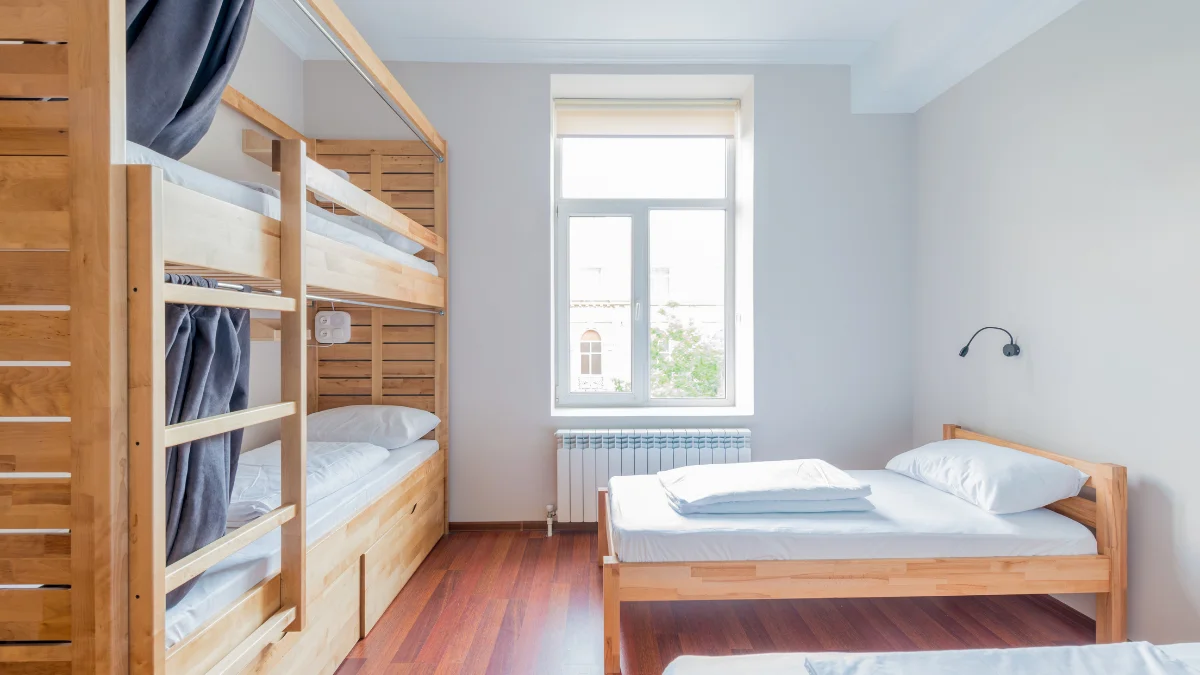
The Lofted Bed Option That Creates an Entire Room Underneath
A lofted bed frame raises the mattress to ceiling height. The entire footprint below becomes study space, wardrobe space, or seating area. The bedroom that had one function now has two. Same square footage. Double the use.
Mistake 2 — The Desk Position That Wastes Natural Light and Motivation
Where your desk faces changes everything. Here’s the science.
Why Facing a Blank Wall While Studying Is the Worst Study Setup
A desk facing a blank wall is the most demotivating study environment available. The eye has nowhere to rest. The brain has no stimulation break. Productivity drops and the college student associates the bedroom with frustration. Blank wall = motivation killer.
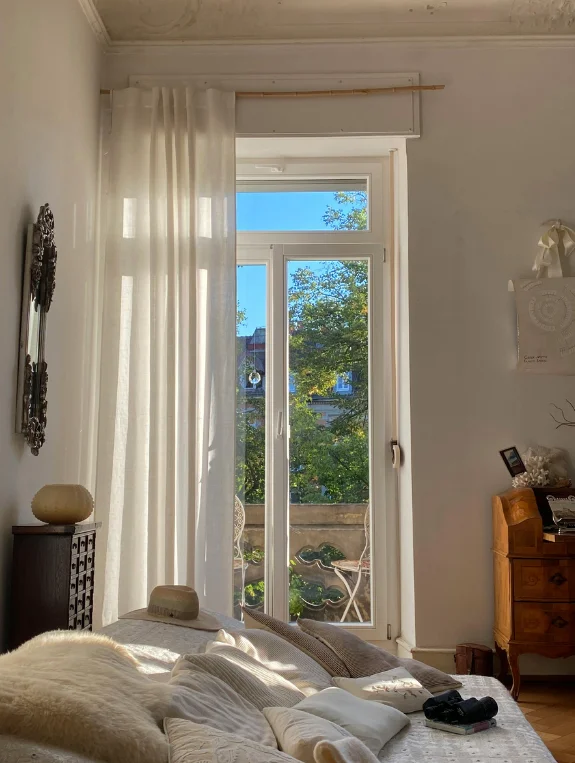
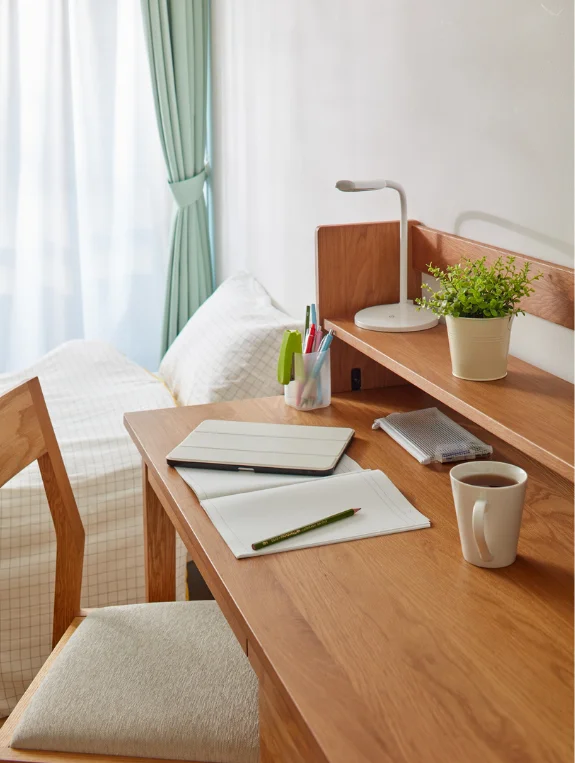
The Window-Facing Desk Position That Changes Everything About Studying
Desk positioned to face the window. Natural light on the task. A view for mental breaks. The study environment becomes restorative instead of draining. The same bedroom suddenly supports academic performance. Window view = restorative study.
The Floating Desk That Takes Minimal Space While Serving Maximum Function
A wall-mounted floating desk folds flat when not in use. Takes zero floor space when closed. Creates a proper study surface when open. The college bedroom gains and loses study space on demand. Desk appears. Desk disappears. Space stays free.
Mistake 3 — The Dresser That Steals Floor Space Without Earning It
Your dresser is the villain. Here’s the replacement.
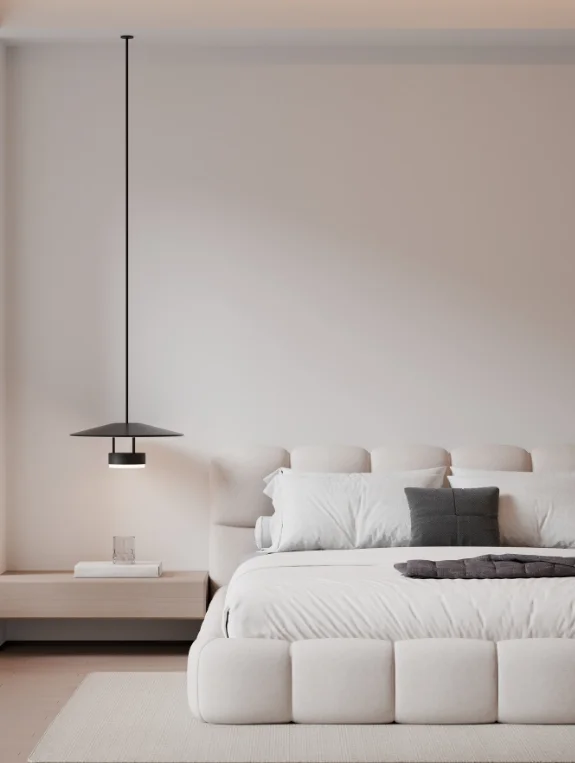
Why a Dresser Is the Worst Furniture Choice for a Tiny College Bedroom
A dresser uses 6-8 square feet of irreplaceable floor space. In a tiny college bedroom, this is the difference between a room that feels livable and one that feels like a corridor between the door and the bed. One piece of furniture. Half your room lost.
Build a functional, well-proportioned dorm or student room layout using our top affordable college apartment bedroom hacks
The Under-Bed Storage That Solves the Same Problem for Free
Under-bed storage boxes hold everything a dresser holds without using any floor space. Flat storage boxes with lids for folded clothes. Vacuum bags for seasonal items. The dresser problem solved at zero footprint cost. Same storage. Invisible footprint.
The Vertical Alternative When a Dresser Is Absolutely Necessary
A tall narrow dresser instead of a wide low one. Same storage capacity, four times smaller floor footprint. Goes up, not out. The vertical dresser solves the storage need without sacrificing the floor space. Vertical thinking. Space preserved.
Mistake 4 — Zero Vertical Storage While the Walls Stay Empty
Your walls above eye level are wasted. Here’s how to reclaim them.
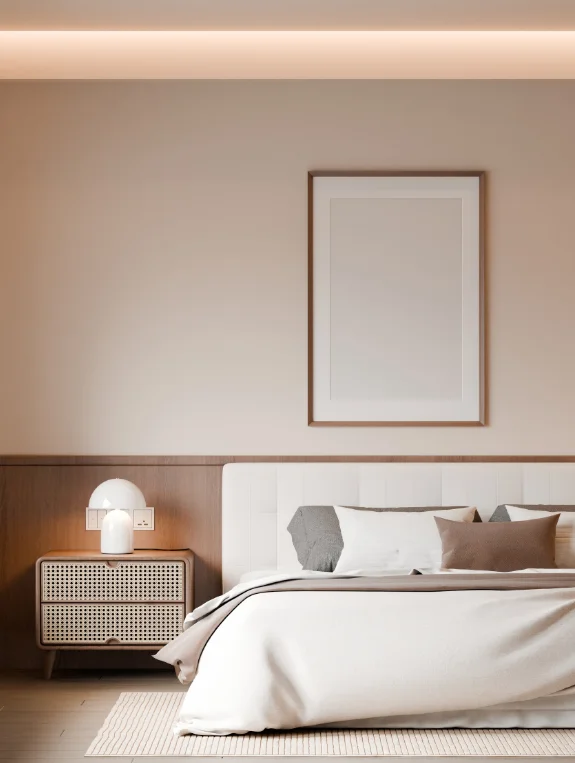
Why College Bedroom Walls Above Eye Level Are the Most Wasted Space Available
Most college students store everything at floor and waist level. The walls from eye level to ceiling are completely empty. This vertical space is the most valuable storage real estate in a tiny bedroom and it is being ignored. Empty walls. Wasted opportunity.
The Floating Shelf System That Turns Empty Walls Into Functional Storage
Three or four floating shelves from floor to near ceiling on one wall. Holds books, supplies, personal items, display objects. The same items that were piling on the floor or desk now live vertically on the wall. Vertical storage. Everything visible. Everything accessible.
The Over-Door Storage That Uses Space Nobody Ever Thinks About
Over-door organizers on every bedroom door. Back of closet door, back of bedroom door. Holds shoes, accessories, supplies, personal items. Storage space that was completely invisible and completely wasted. Every door. Hidden storage.
Mistake 5 — Study Zone and Sleep Zone Sharing the Same Wall
Your brain cannot do both. Here’s why separation matters.

Why the Brain Cannot Switch Between Study Mode and Sleep Mode in the Same Visual Space
When the desk and bed are visible from the same position, the brain receives mixed signals. The study equipment keeps the brain activated during sleep hours. The bed creates guilt during study hours. The zones need physical and visual separation. Mixed signals. Conflicting modes. Poor sleep and poor studying.
The Zone Separation That Costs Nothing but Changes Everything
Bed in the corner furthest from the door. Desk under the window or beside it. A bookshelf or curtain creating a soft boundary between zones. The brain learns that different parts of the room mean different things. Study corner. Sleep corner. Your brain knows the difference.
The Rug That Creates Invisible Zone Boundaries
One small rug under the desk area. No rug in the sleep area. The textural boundary creates a subconscious zone signal that helps the brain switch between study and sleep mode more effectively. Invisible boundary. Powerful effect. Free solution.
The Optimized Tiny College Bedroom Layout Step by Step
Here’s the exact process. Follow it in order.
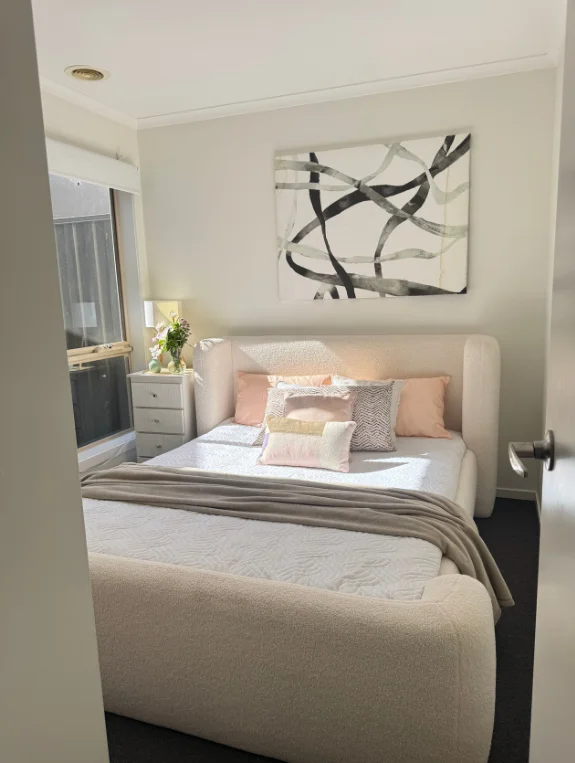
The Order That Makes the Layout Optimization Most Efficient
Step 1: Empty the room completely. Step 2: Measure everything and draw a floor plan. Step 3: Place the bed in the corner. Step 4: Position the desk at the window. Step 5: Add only what fits comfortably. The layout that emerges is always better than the original. Process over perfection.
The Floor Plan Drawing That Prevents Every Layout Mistake
A simple paper sketch with room dimensions. Furniture cutouts at scale. Try every arrangement on paper before moving anything physically. The paper test reveals which arrangements work and which waste space without any heavy lifting. Paper first. Heavy lifting second. Mistakes zero.
The Measurement Rule That Prevents Furniture Purchase Mistakes
Measure every doorway, every pathway, every wall before buying any furniture. A bed that does not fit through the door. A dresser that blocks the closet. These mistakes cost money and floor space simultaneously. Measure first. Purchase second. Mistakes prevented.
Where to Find Space-Smart College Bedroom Furniture
You know where to shop. Here’s the exact strategy.
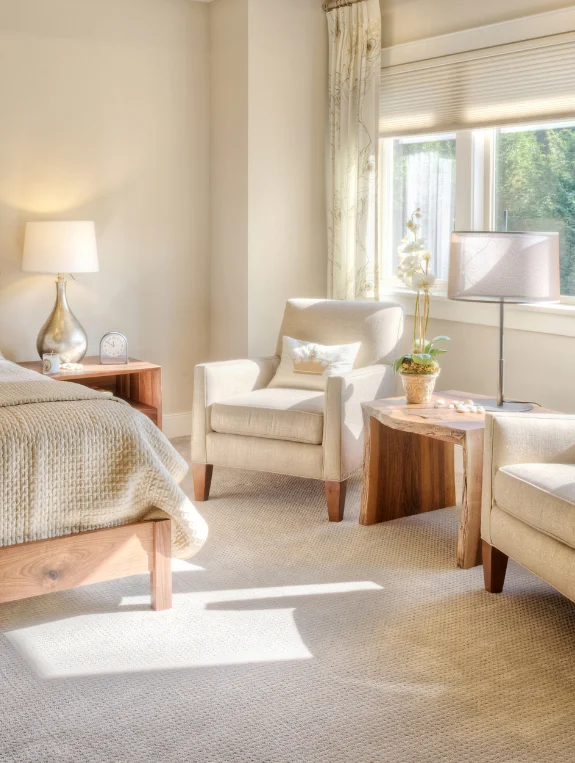
Best Sources for Space-Saving Bed Solutions
IKEA for loft beds, storage beds, and platform beds with under-bed access. Amazon for affordable under-bed storage systems. Wayfair for a wide range of small-space bed frames. Every budget. Every function. All college-friendly.
Best Sources for Vertical Storage and Wall Solutions
IKEA for floating shelves in every configuration. Amazon for over-door organizers and wall-mounted storage. Target for affordable floating shelf systems that look intentional. Vertical solutions. Budget options. All accessible.
Keep your layout looking open and intentional by streamlining your decor through modern minimalist bedroom styling
Conclusion
A tiny college bedroom with the right layout feels twice as large as the same room with the wrong one. Bed in the corner, desk at the window, under-bed storage, vertical shelving, separate study and sleep zones.
These five layout decisions transform the same square footage from cramped and frustrating to functional and livable.
Start with an empty room and a floor plan before moving any furniture back in. Draw the room on paper first. Try the corner bed position.
Position the desk at the window. Add only what earns its floor space. The optimized layout will be immediately obvious once you see it on paper. By the time you move the first piece of furniture, you already know it works.