Oppressive Living Room Ceiling Design Choices Making Slanted Drywall Structures Feel Suffocatingly Low and Dark
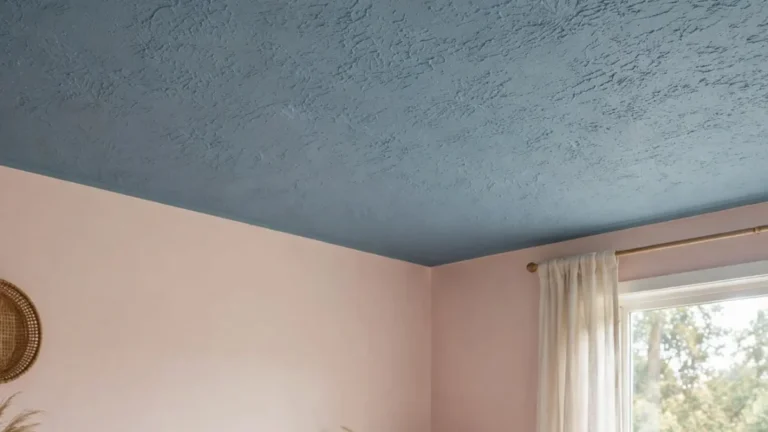
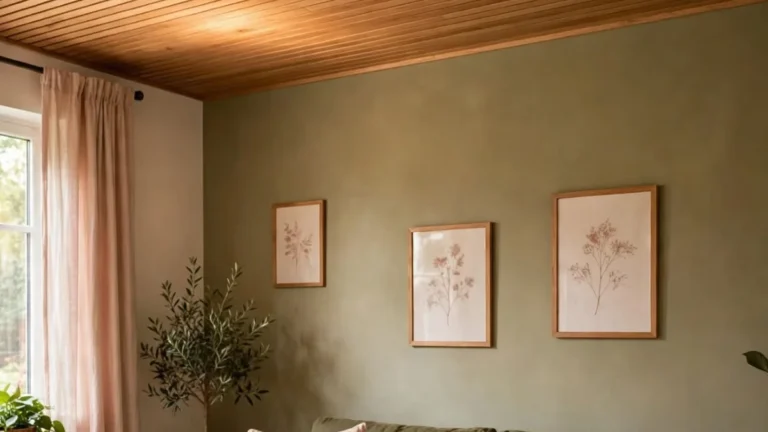
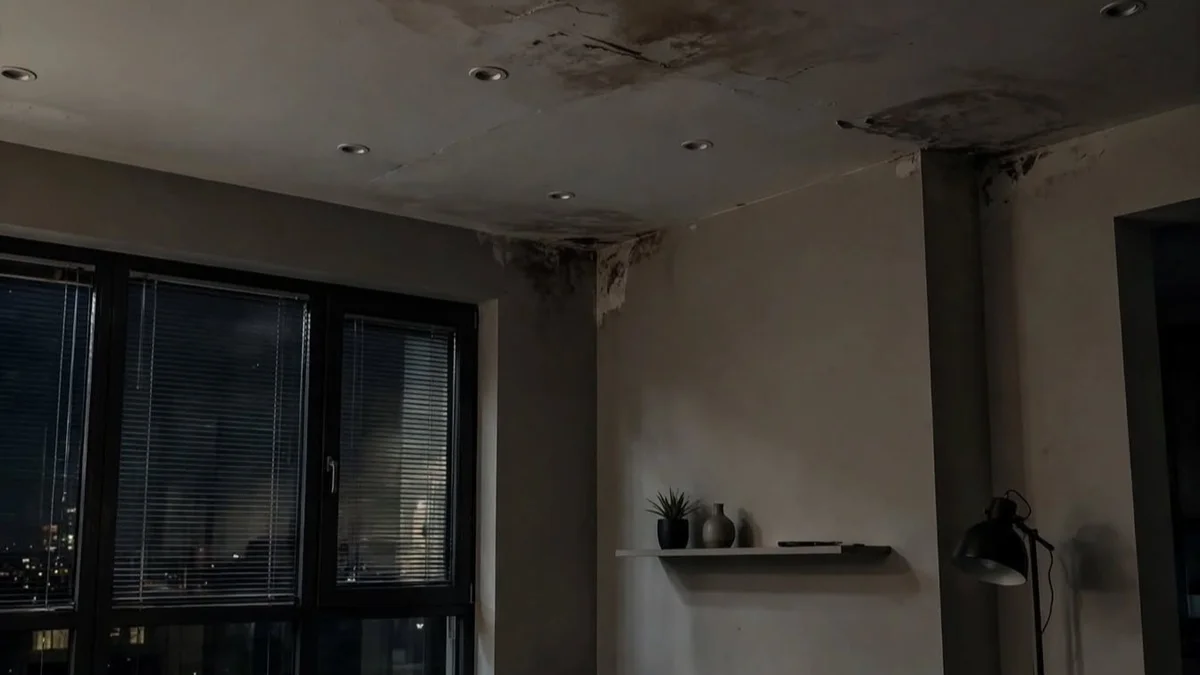
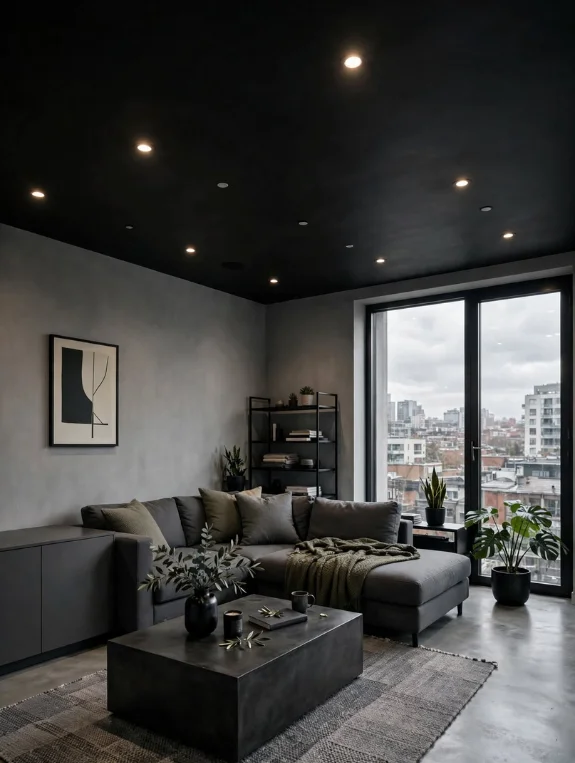
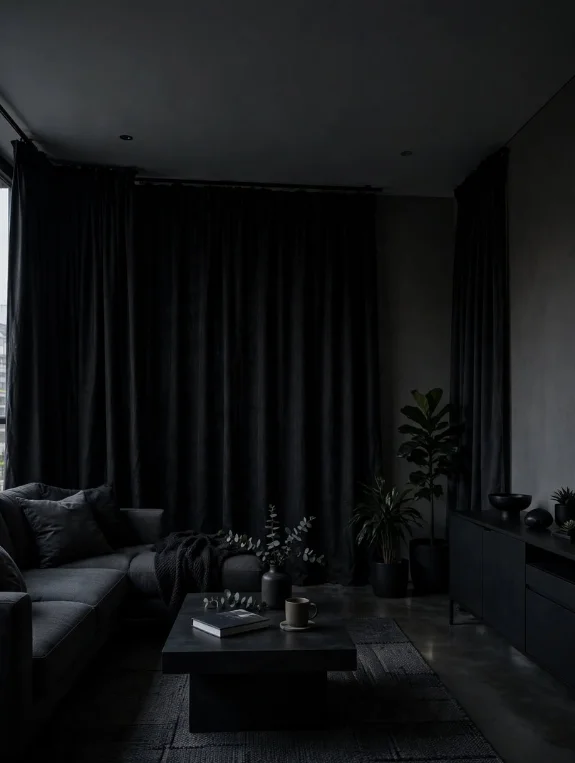
Oppressive slanted drywall ceilings feel suffocating when you use dark matte paint, heavy bulky beams, and low-hanging chunky lights.
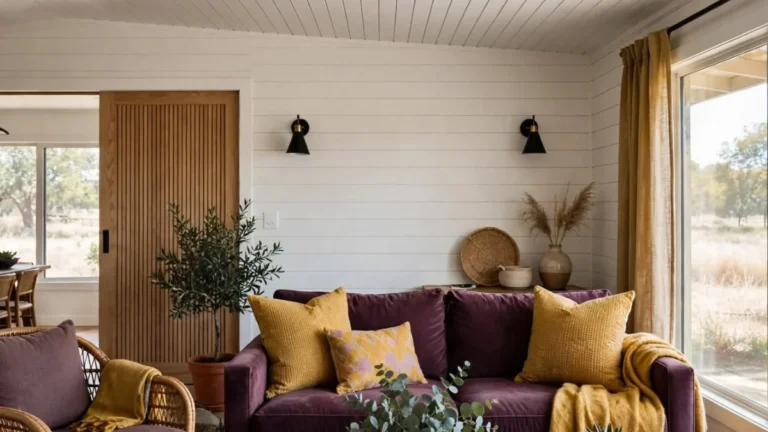
Glossy finishes, harsh contrast between ceiling and walls, and cluttered decor also make the room feel lower and darker. Using the same light creamy tone on ceiling and walls keeps it seamless and tall.
Light matte paint and hidden lighting bounce natural light and make slanted structures disappear instead of pressing down.
One continuous soft color tricks the eye and makes living rooms feel airy, open, and intentional. Avoiding heavy contrast instantly makes your space feel bigger, calmer, and way more expensive.
Your Slanted Ceiling Is Not the Problem. What You Did to It Is.
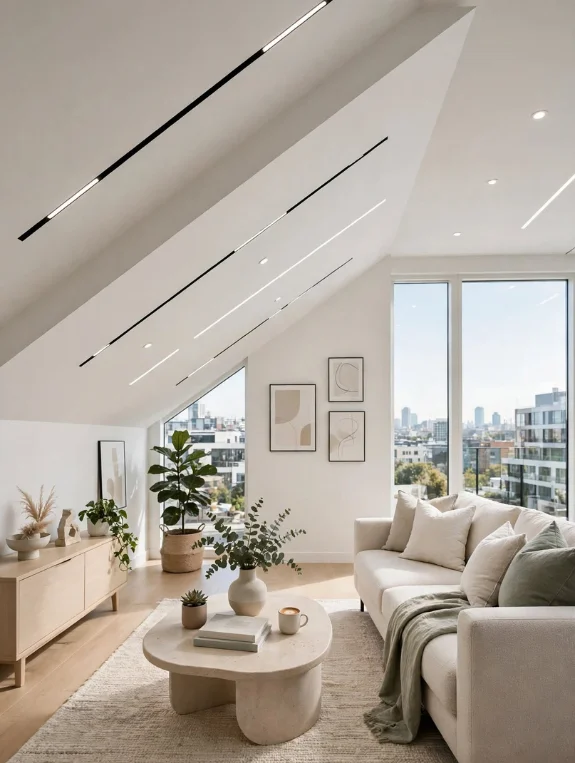
A Slanted Drywall Ceiling Feels Oppressive for One Reason: The Wrong Design Choices Are Working Against the Architecture
If your living room ceiling feels like it’s pressing down on you, it’s easy to blame the ceiling itself. But the slope is neutral. It’s the paint color, the lighting, the furniture height, and the window treatments around it that decide whether it feels like a charming architectural detail or a weight on your shoulders. Almost every oppressive slanted ceiling has three to five small mistakes stacking on top of each other.
Fix the Choices and the Same Ceiling That Has Been Making You Uncomfortable Starts Feeling Like the Room’s Best Feature
You don’t need a renovation, and you don’t need to raise the ceiling or replace any drywall. You just need to know which decisions are making the room feel wrong and reverse them. Most of these fixes can be done in a single weekend for under $100.
The Mistakes Making Your Ceiling Feel Lower Than It Is
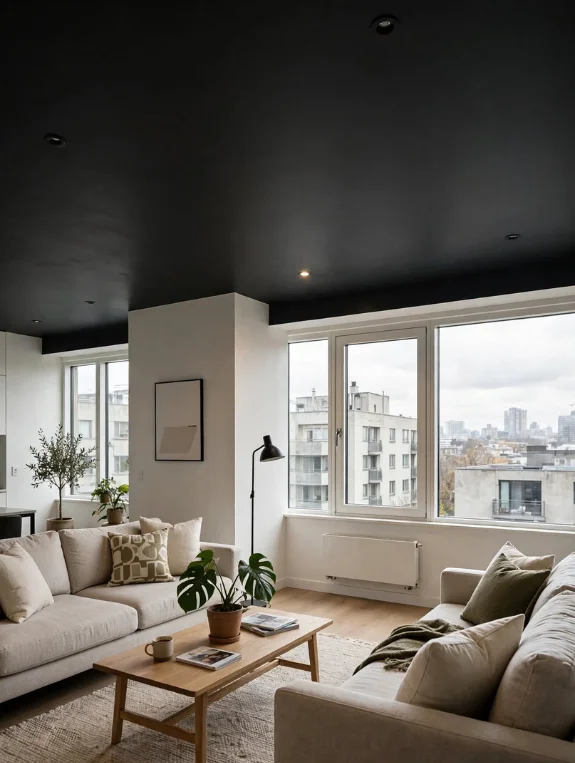
The Complete List of Ceiling Design Choices That Create the Suffocating Feeling
- Dark paint on the slanted surface, which pulls the ceiling closer to you
- The same dark color on ceiling and walls, so the eye can’t tell where one ends
- A single overhead light right under the lowest point
- A glossy or semi-gloss finish that bounces the angle of the slope back at you
- Tall furniture tucked under the lowest section
- Heavy dark drapes that keep daylight from reaching the ceiling
- A ceiling fan hanging from a low point on the slope
- No upward lighting at all, so the ceiling stays dark all evening
The Combination That Creates the Most Suffocating Living Room Ceiling
Dark paint, a single overhead light, and tall furniture under the low point make the worst trio. Each one makes the others feel stronger, and together they can make a room feel heavy before anyone even sits down. The good news is that fixing all three at once creates the most dramatic transformation.
The Paint Choice That Started the Problem
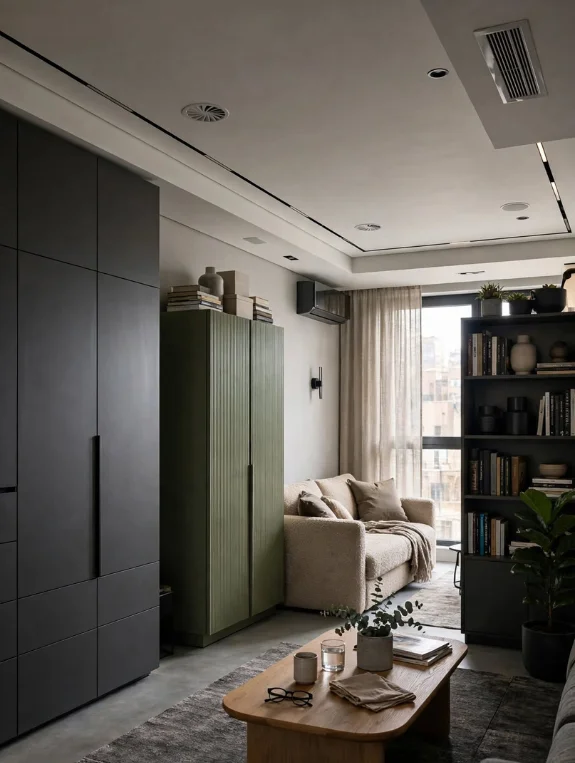
Why Dark Colors Behave Differently on Slanted Ceilings Than on Flat Ones
A deep color on a high, flat ceiling can feel cozy and dramatic, because it’s far enough away that you don’t feel it. A slanted ceiling is already much closer to you than a standard one.
Put a dark color on a surface that’s already close, and it reads as pressing down. The same shade that looks sophisticated overhead in one room can feel heavy in another simply because of distance.
The No-Contrast Mistake That Makes Rooms Feel Like Caves
When the slanted ceiling and the walls share the same color, your eye has no clue where the wall stops and the ceiling starts. The whole upper half of the room blends into one dark shape. Rooms with even a little contrast between ceiling and wall almost always feel taller and more open, no matter how high the ceiling actually is.
The Specific Paint Fix That Opens the Room Immediately
Paint the slanted ceiling a warm white or very pale warm neutral, at least two shades lighter than your walls. Benjamin Moore Chantilly Lace and Sherwin-Williams Alabaster are two popular picks across the USA, and both have warm undertones that keep the white from feeling harsh under evening light. The ceiling steps back visually and the room instantly feels taller.
The Lighting Situation Making Everything Worse
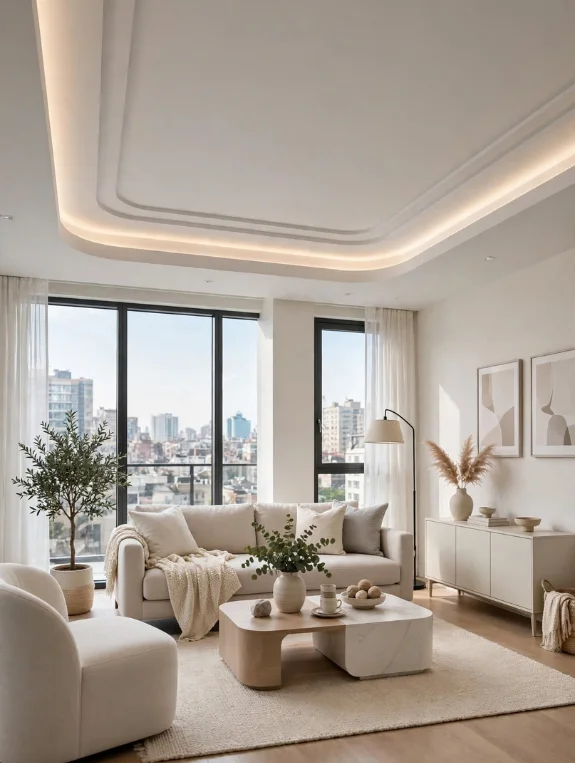
Why a Single Overhead Fixture Under a Low Slope Is the Worst Possible Lighting Plan
A light hanging from the lowest point of a slanted ceiling does two things at once, and both hurt. It draws your eye straight to the lowest spot in the room, and it throws all the light downward, leaving the slope itself dark and heavy. The light that was meant to brighten the room ends up making the ceiling feel heavier every evening.
The Upward Light Strategy That Changes How the Ceiling Reads
Aim your light up instead of down. A floor lamp with an upward-facing shade, a plug-in sconce angled toward the slope, or LED strips along the top edge of the wall all wash warm light onto the drywall.
A dark, heavy surface becomes a soft glowing one, and the ceiling starts to feel like it’s lifting. A $35 floor lamp can change the whole feel of the room by 7pm tonight.
The Lamp Placement Formula That Works in Every Living Room With a Slanted Ceiling
Use one floor lamp in the corner with the most clearance, aimed slightly upward. Add one plug-in sconce on the wall where the slope begins.
If you have a wall-ceiling junction or crown molding, tuck a set of warm LED strips along it. Three sources, all pointed up or across the slope, with the overhead fixture off or saved for cleaning. That layered glow is what makes a slanted ceiling feel like a feature.
The Furniture Choices Making the Low Points Feel Lower
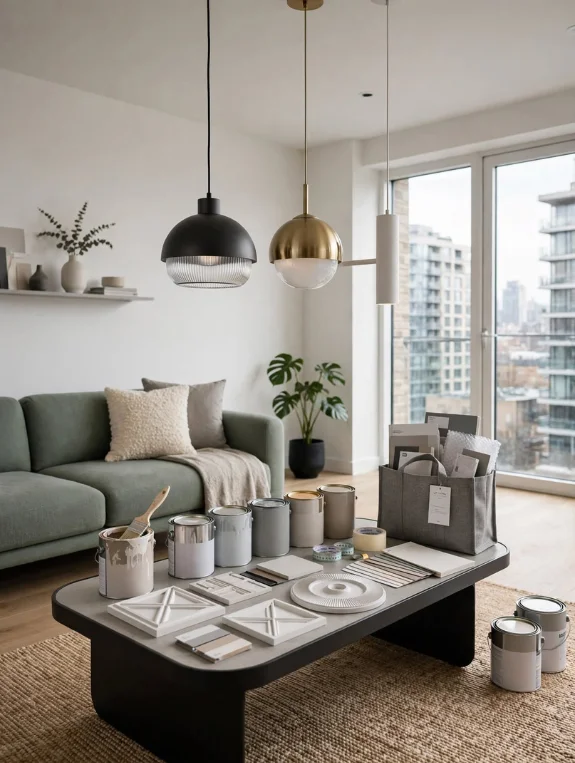
Tall Furniture Under the Lowest Ceiling Section: The Physical Compression Mistake
A six-foot bookcase tucked under the lowest part of the slope leaves just a few inches between the top of the furniture and the ceiling. Your eye reads that tiny gap as proof of how little space there is. The room doesn’t just look low, it feels squeezed, because the evidence is right there every time you glance that way.
The Furniture Height Rule for Slanted Ceiling Living Rooms
Keep everything under the slanted section below 48 inches tall. Low sofas, coffee tables, and ottomans belong in the lower zone. The tall bookcase, floor lamp, and big plant should move to where the ceiling is highest. Once the furniture stops reminding you how close the ceiling is, the room can finally breathe.
Low-Profile Furniture That Makes Slanted Ceilings Feel Taller
A low sofa with visible legs and a seat height under 17 inches, a slatted coffee table instead of a chunky solid one, and seating with a back no taller than 36 inches all leave more visual space between the furniture and the slope. The ceiling that felt suffocating over a traditional sofa can feel comfortable over a low one.
The Window Treatment That Is Keeping the Ceiling Dark All Day
Heavy Drapes That Block the One Free Ceiling Brightener: Natural Light
Daylight bouncing up onto a slanted ceiling is the most powerful free brightener you have. Heavy lined drapes pulled tight to the window block it before it ever gets there, so the ceiling stays dark all day, even on the sunniest afternoon. The drapes you chose for coziness may be keeping the heavy feeling alive every hour the sun is out.
The Curtain Change That Brightens the Ceiling Without Sacrificing Privacy
Hang sheer or light-filtering curtains as close to the ceiling line as you can, so soft daylight washes up toward the slope. Add a blackout layer behind them for nighttime privacy. This two-layer setup gives you daylight when you want it and full darkness when you need it.
Hanging Curtains Higher and Wider Than the Window to Maximize Ceiling Light
Mount the rod at the ceiling line and let the panels extend about 12 inches past each side of the window. The window looks bigger, the light spreads wider, and more of it reaches the ceiling. It takes about 20 minutes and costs little more than a longer rod.
The Finish and Texture Mistakes That Amplify the Problem
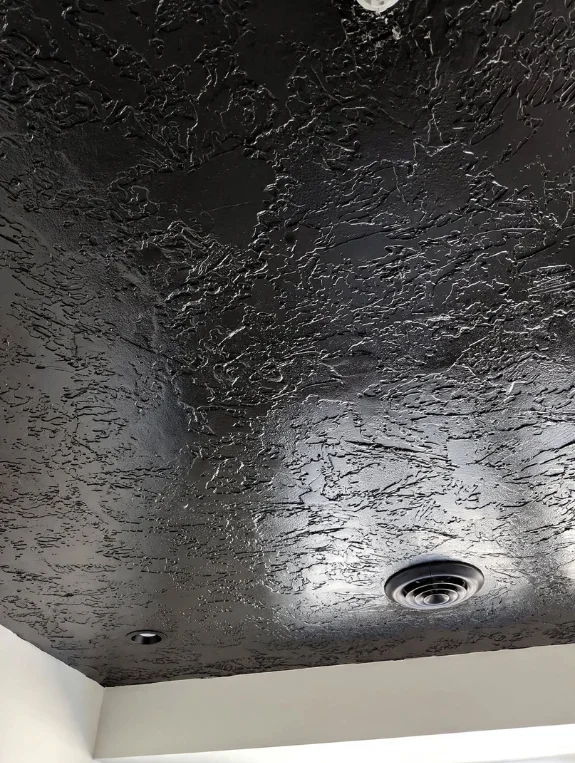
Semi-Gloss Drywall Ceiling Paint That Reflects the Angle Back at You
Semi-gloss and satin paint bounce light off the slope, and every lamp in the room leaves a bright reflection on the ceiling.
That constantly pulls your eye upward and reminds you how close the surface is. A matte finish would let the ceiling fade into the background, but a glossy one demands attention in the worst way.
The Only Finish That Works on Slanted Living Room Drywall
Flat matte, no exceptions, on the slanted section. Matte paint absorbs light, so the ceiling recedes quietly. It’s a single can of paint applied over your current finish, and it’s probably the most cost-effective fix in this whole post.
The Smooth vs Textured Drywall Finish and What Each Does to the Room
A smooth ceiling looks clean and intentional and fades back easily, because nothing catches the light. Heavy orange-peel or popcorn texture casts little shadows that emphasize the angle.
If your ceiling is very textured and the room still feels oppressive, the texture may be part of the problem, and smoothing it before repainting gives a noticeably better result than painting over it.
The Complete Room Fix Sequence That Works in One Weekend
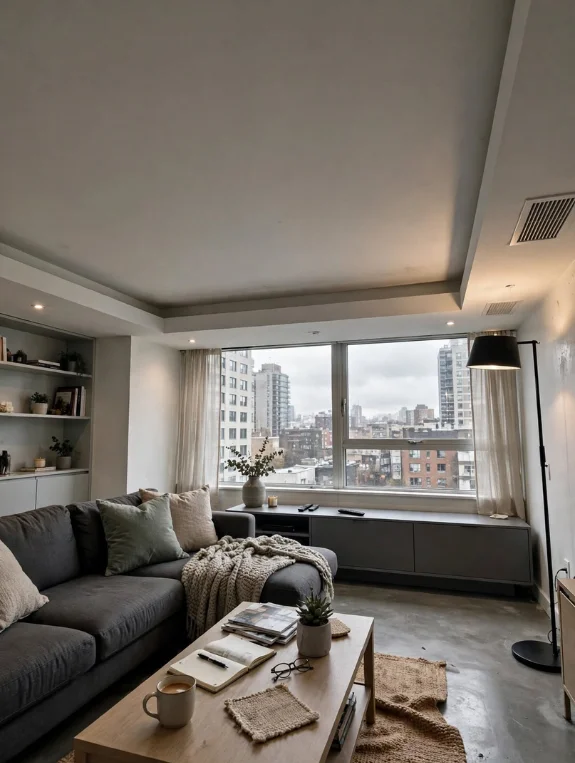
Saturday Morning: Paint and Curtains
Repaint the slanted ceiling in warm white matte, two coats, and swap heavy drapes for sheer panels hung at ceiling height. These two changes tackle the biggest daily causes of the heavy feeling and cost under $75 together. By Saturday afternoon, the room already looks different.
Saturday Afternoon: Furniture and Lighting
Move anything taller than 48 inches to the highest part of the room. Add a warm floor lamp aimed upward in the low corner, and plug in one warm sconce where the slope starts. The ceiling is being lit from below for the first time, and the furniture finally fits the space properly.
Sunday: The Finishing Details That Complete the Transformation
Swap any glossy trim around the slope for matte, put warm 2700K bulbs in every fixture that has a cool or daylight bulb, and hang one large mirror opposite the lowest slope to bounce the new warm light around the room. By Sunday evening, it will feel like a different room from the one that felt suffocating on Friday.
Where to Find Everything You Need for This Fix
Best Paint Sources and Color Picks for USA
Benjamin Moore carries Chantilly Lace and White Dove through independent paint stores and Ace Hardware. Sherwin-Williams has Alabaster and Shoji White in roughly 3,500 locations across the country.
BEHR at Home Depot is the most budget-friendly option for warm white ceiling paint. Samplize sells peel-and-stick paint samples for about $5, so you can test three warm whites right on your actual ceiling before buying a full can.
Best Sources for Lighting and Curtain Fixes
Amazon has warm 2700K bulbs in bulk, plug-in wall sconces in warm brass or matte black, and floor lamps with upward-facing shades. Target is a good bet for affordable sheer curtain panels in warm white and natural linen, and IKEA has ceiling-height curtain rods plus RITVA and EKTORP sheer panels that work in almost any slanted room.
Conclusion
The slanted ceiling that’s been making your living room feel suffocating is really just a few fixes away from becoming the room’s best feature. Warm white matte paint, upward-directed lighting, sheer curtains hung at ceiling height, and low furniture under the slope all work together to undo every choice that made the room feel heavy.
The ceiling itself never changes, only the decisions around it do. Start with one can of warm white matte paint this weekend, about $25 to $35 and two hours of work, and by Sunday morning the room will already feel like a different place.