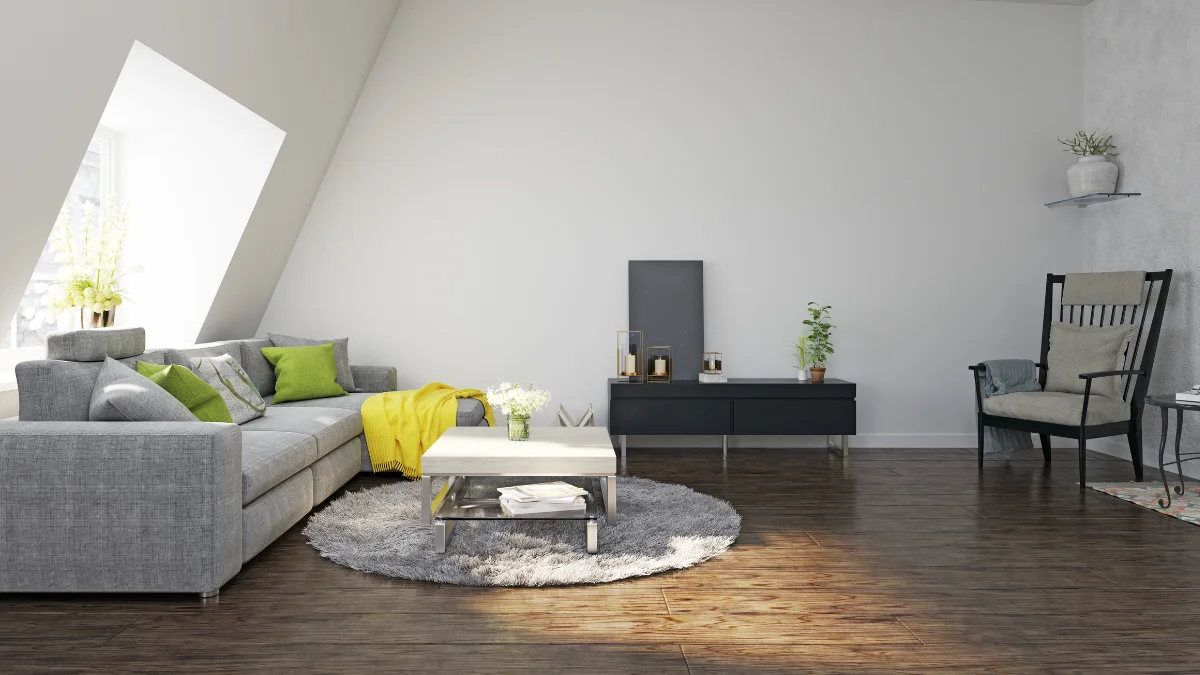
Attic Decor Choices Making Your Angled Walls Look Darker and Heavier Than They Actually Are
Dark paint, bulky furniture, and blocking natural light make slanted walls look smaller and gloomier. Heavy curtains and cluttered decor only add more visual weight to your attic.
Fix it with light creamy tones, low-profile furniture, mirrors, and open skylights. Use warm layered lighting to keep the space bright, airy, and intentional. It will instantly feel open, calm, and expensive.
Angled Walls Do Not Have to Feel Heavy — Specific Decor Choices Are Making Them That Way
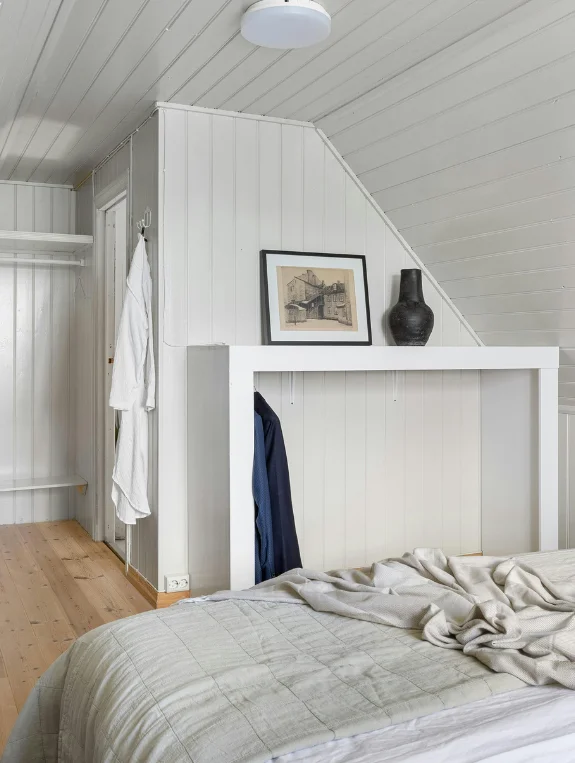
The Same Attic Looks Dramatically Different Depending on Three Simple Decor Decisions
If your angled walls feel like they’re closing in on you, it’s worth knowing that three simple decisions, color, lighting, and texture, are almost always behind it.
Get all three wrong at once, and you end up with the kind of attic that feels genuinely depressing to spend time in. Get them right, and those same walls become the room’s best feature.
Once You Identify the Specific Choices Creating the Darkness — Fixing Them Takes One Weekend
The good news is that most depressing attic decor is completely fixable without touching a single wall structurally.
A few paint adjustments, some new lighting, and a couple of textile swaps solve the vast majority of dark, heavy angled wall problems, and none of it requires a contractor.
The Depressing Angled Wall Choices at a Glance
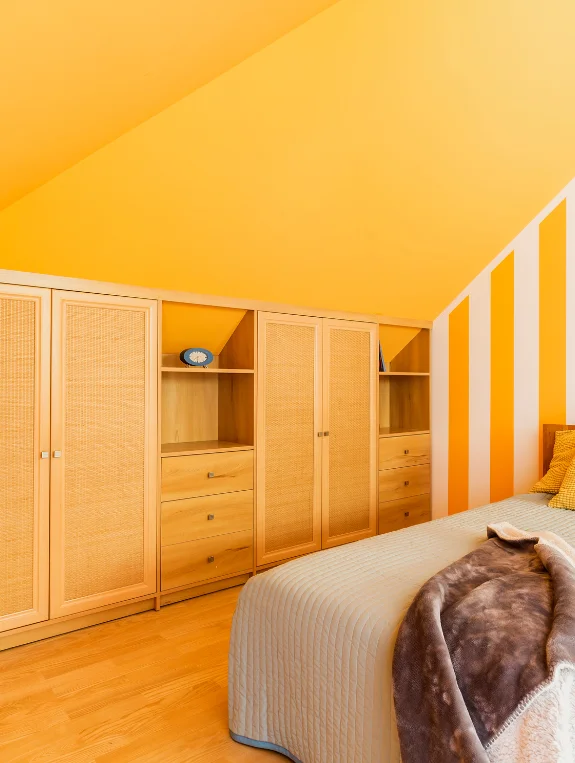
The Choices Making Attic Angled Walls Look Dark and Heavy
- Dark paint on the angled sections themselves
- The same dark color used on both the ceiling and the angled walls
- Heavy dark wood paneling with no lighter contrast anywhere
- No lighting specifically aimed at the angled sections
- Dark, heavy curtains hung right on the slope
- No pattern or texture to break up the dark mass
- Furniture in the same dark tone as the walls around it
- No mirror positioned to reflect light into the angle
The Most Common Cause of Heavy-Looking Angled Walls
Out of everything on this list, dark paint with no lighter ceiling contrast causes the most trouble by far. When the angle and the ceiling above it are both dark, the slope reads as one solid, heavy mass pressing down into the room. Simply separating the ceiling into a lighter shade creates immediate visual relief.
The Dark Paint Problem on Angled Sections
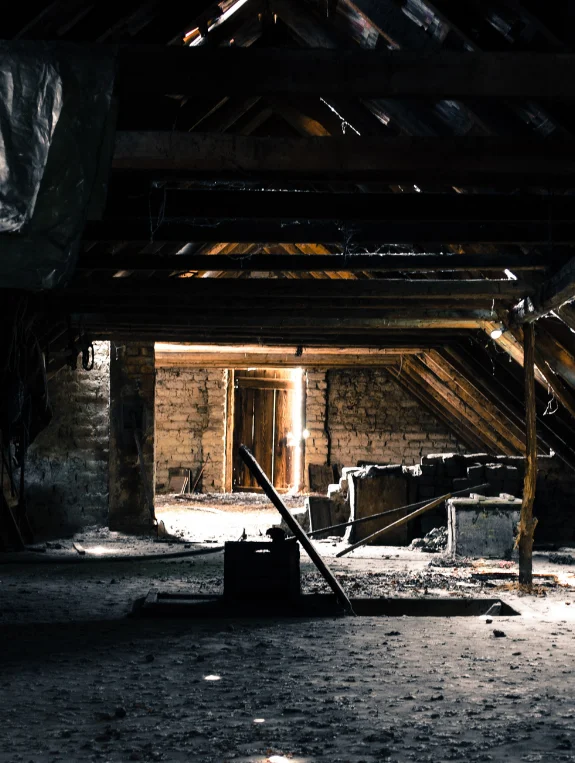
Why Dark Paint on a Slope Behaves Differently Than on a Flat Wall
A flat dark wall in a standard room tends to read as a bold, confident statement. That same dark color on a sloped wall reads completely differently, more like a heavy object pressing inward.
The angle genuinely changes how the brain interprets the color, which is why slopes painted dark almost always feel heavier than flat walls in the exact same shade.
The Contrast Ceiling Trick That Lifts the Attic Immediately
Painting the ceiling section above the slope in warm white or cream, while keeping the slope itself in either a lighter version of the same color or matching warm white, creates a visual separation that lifts the whole room dramatically. That contrast is doing more work than most people expect from a can of paint.
The Warm White Paint That Works Best on Angled Attic Walls
Benjamin Moore’s White Dove or Farrow and Ball’s All White both carry warm undertones that reflect amber light back into the room instead of absorbing it.
These are the kinds of warm whites that make angled walls genuinely glow rather than swallow the available light.
The Lighting Mistake That Creates Maximum Shadow on Slopes
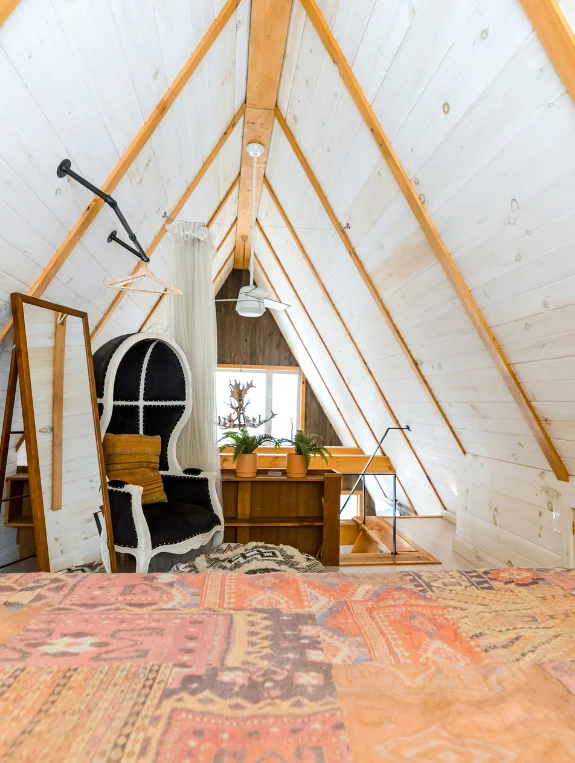
Why a Single Overhead Light Makes Angled Walls Darkest
A single central overhead light casts its light straight down, which means the slopes receive it at the most unflattering angle possible.
The shadows created this way genuinely make angled walls appear darker than they actually are, regardless of what color they’re painted.
Wall Lights Aimed Directly at the Slope
Warm wall sconces or plug-in lights mounted to shine directly onto the angled sections eliminate that shadow entirely. A slope that looked dark and heavy under overhead lighting can glow warmly once the light is actually aimed at it instead of down past it.
LED Strips Along the Beam Base That Wash Light Up the Slope
Warm LED strips attached to the underside of a beam, or run along the base of the slope, wash light upward and catch the angle in a way that makes it glow. It’s genuinely one of the most affordable slope-lighting solutions available.
The Wood Paneling Problem That Creates Cave Walls
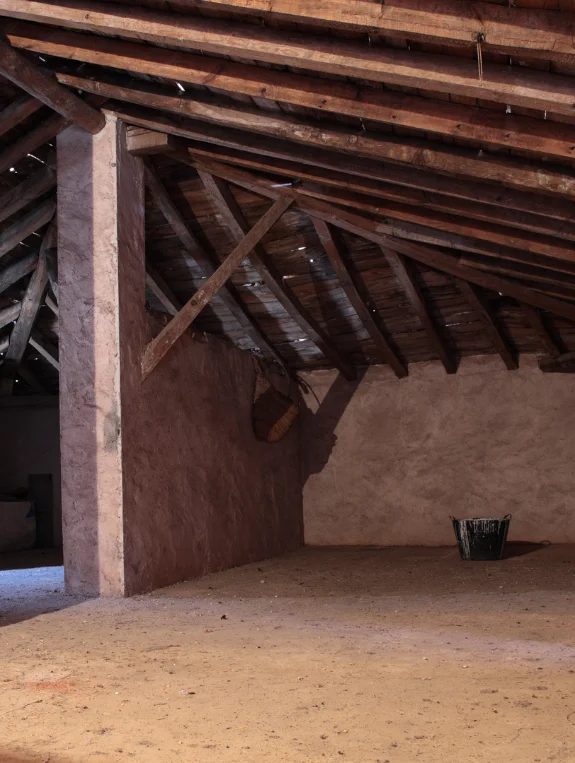
Why Dark Wood Paneling on Angled Walls Feels Like Being Inside a Barrel
Unbroken dark wood running across angled walls can create a tunnel or barrel-like effect, since the repetitive, curved texture in a dark tone reads as enclosing rather than warm.
The same exact paneling in a lighter treatment can read as full of character and warmth instead.
The Limewash or Whitewash Treatment That Transforms Dark Paneling
A limewash or diluted white paint applied over existing dark wood paneling lets the grain show through while lightening the overall effect considerably.
The panels transform from dark mass into genuine architectural texture, and the whole treatment costs under $30.
The Contrast Strip That Breaks Dark Wood Into Manageable Sections
Thin painted stripes or natural wood strips in a lighter tone, applied horizontally across dark paneling, break up the dark mass into smaller, more manageable sections. The paneling ends up reading as patterned rather than simply heavy.
The Textile Choices Making Angled Walls Feel Heavier
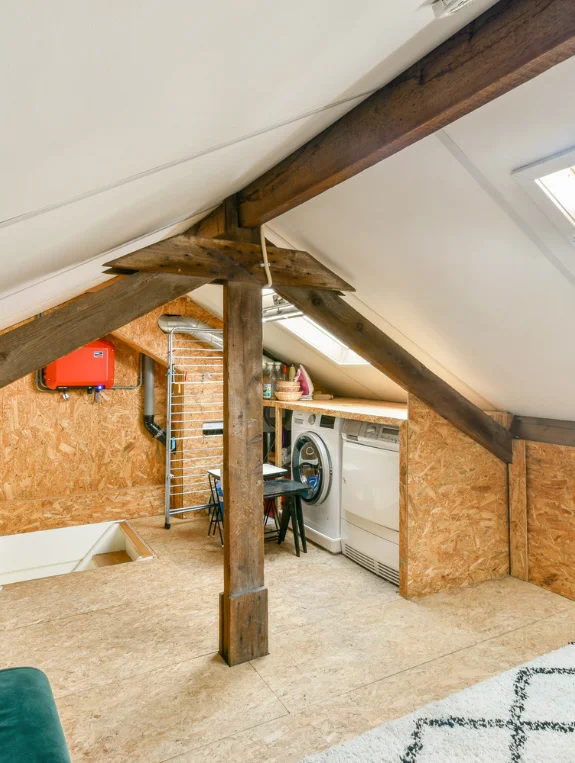
Dark Heavy Curtains Hung on the Slope Add Visual Weight
Hanging dark curtains on an already-dark slope essentially doubles the visual weight in that spot, since the eye registers dark wall plus dark fabric as maximum heaviness. Swapping those curtains for something sheer or in a light natural fabric lifts the whole slope almost instantly.
The Sheer Linen Alternative That Makes the Slope Beautiful
Natural linen or sheer white fabric hung from the highest point of the slope drapes gracefully along the angle instead of fighting it. The slope becomes soft and intentional rather than dark and heavy.
Pattern and Texture That Break the Dark Uniformity
A light patterned textile, something subtle like a soft botanical or geometric print in pale tones, hung against a dark slope breaks up the uniformity. Patterned walls genuinely tend to feel lighter than solid ones, regardless of the underlying base color.
The Mirror and Reflective Surface Fixes
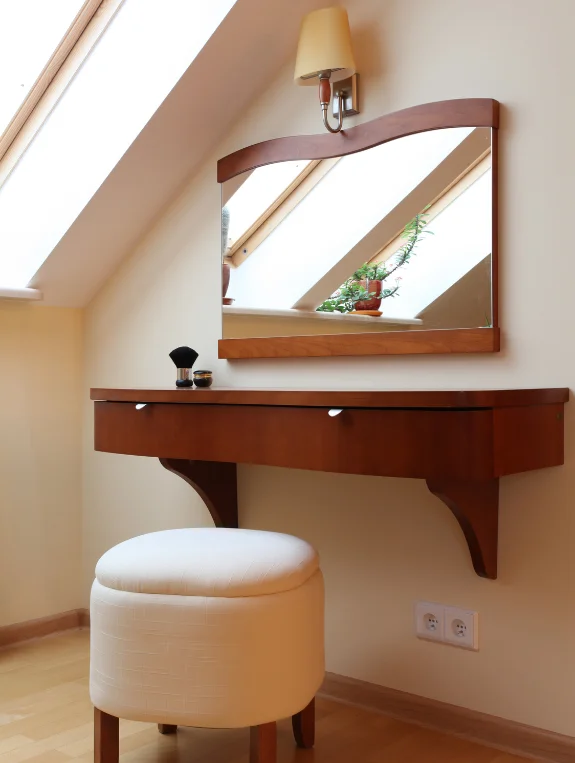
A Mirror on the Flat Gable Wall That Bounces Light Into the Slopes
A large mirror placed on the flat end wall, opposite the main window, catches incoming light and redirects it toward the angled sections of the room. Slopes that used to sit in constant shadow can suddenly start receiving genuine reflected light.
Metallic or Glossy Accents on Dark Slopes
Warm brass picture frames, copper plant pots, and gold accessories placed against a dark slope create small points of reflected warm light that break up the solid darkness. The slope starts to read as intentional rather than oppressive.
A Skylight or Roof Window as the Ultimate Slope Lightener
Where renovation is genuinely on the table, adding a Velux or roof window directly into the slope lets unobstructed sky light fall right onto the angled surface. It’s the most fundamental fix available for a permanently dark sloped wall, though obviously the biggest commitment on this list.
The Weekend Fix Plan for Depressing Angled Walls
Day 1 — Paint and Lighting
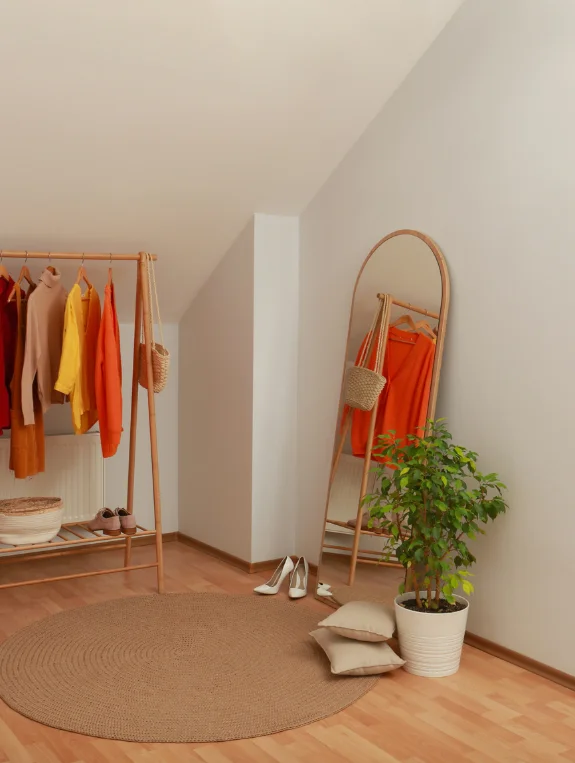
Repainting the ceiling in warm white and adding warm wall sconces or LED strips aimed directly at the slopes creates an immediate transformation before you’ve even touched the furniture.
Day 2 — Textiles and Mirror
Replacing dark curtains with sheer linen, positioning a large mirror on the flat end wall, and adding a few warm metallic accents at key points along the slopes rounds out the second day’s work.
Day 3 — Furniture Contrast and Final Edit
Moving light-colored furniture into positions adjacent to the dark slopes, and removing any unnecessary dark objects from surfaces, is the final step that makes the slopes finally read as design features instead of problems to work around.
Where to Find Solutions for Dark Heavy Attic Walls
Best Sources for Paint and Lighting Fixes
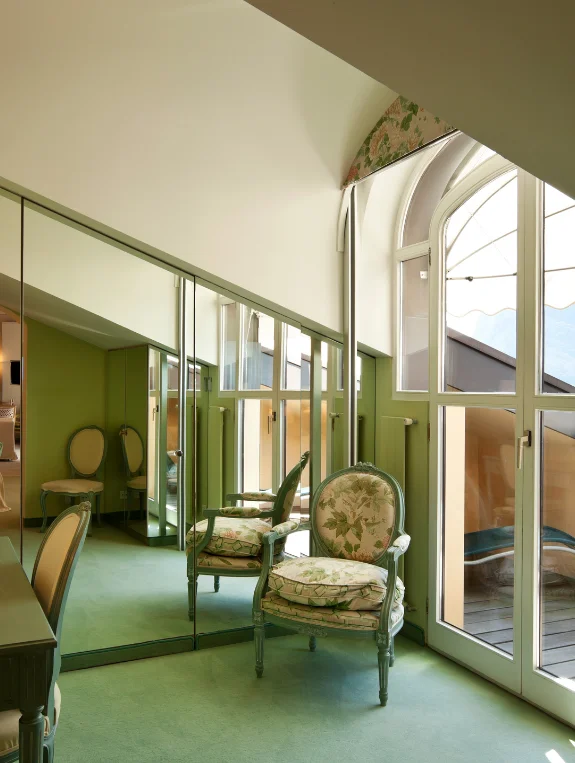
Benjamin Moore and Dulux both offer reliable warm white paint options, Amazon carries warm LED strips and plug-in sconces at accessible prices, and Farrow and Ball is worth the splurge for premium paint with genuinely exceptional warm undertones.
Best Sources for Textiles and Mirrors
IKEA is a solid, affordable source for sheer curtains, Amazon carries large mirrors at a range of price points, and Target is reliable for warm metallic accessories that round out the whole look.
Conclusion
Dark, heavy angled attic walls are always a decor problem, never an architecture problem. Warm white paint with real ceiling contrast, warm lighting aimed directly at the slopes, sheer textiles replacing heavy ones, and a mirror reflecting light into the darkest areas together transform depressing angled walls into the most distinctive feature the room has to offer.
The best place to start is with white paint on the ceiling and one warm light aimed at the slope, about $30 in paint and $25 for a plug-in sconce, since that’s genuinely enough to begin the transformation this weekend.