Attic Ceiling Choices Making Slanted Beams Feel Lower Than They Actually Are
Dark paint on slanted beams, bulky faux beams, and heavy dark wood make your attic ceiling feel lower and heavier instantly.
Low-hanging chunky lights, glossy finishes, and painting beams a different dark color than the ceiling also drag the height down. Using the same light creamy tone on beams and ceiling keeps it seamless and tall.
Light matte finishes bounce natural light and make slanted beams disappear into a bright, airy ceiling. One continuous soft color tricks the eye and makes low attics feel taller, open, and intentional. Avoiding heavy contrast instantly makes your attic feel bigger, calmer, and way more expensive.
The Ceiling Is the Most Powerful Surface in an Attic Room
Get the Ceiling Right and the Room Breathes — Get It Wrong and It Presses Down
Every decision made about an attic ceiling, color, finish, beam treatment, and lighting, either makes a room feel taller or makes it feel lower. A slanted beam ceiling that feels genuinely claustrophobic almost always has three or four correctable mistakes compounding each other, not one big architectural flaw.
Beams Are Not the Problem — How They Are Treated Is
Exposed beams are a real design asset when treated correctly, and they only become oppressive cage bars when the wrong choices get made around them. The beam itself is neutral, it’s the ceiling color, the beam finish, and the lighting that determine whether it reads as beautiful or suffocating.
The Ceiling Mistakes Creating Claustrophobia
The Complete Claustrophobic Ceiling Mistake List
- Dark beam color on a dark ceiling
- The same color on ceiling and walls, removing any visual boundary
- A high gloss ceiling finish
- Downlights recessed into the slope
- Thick chunky beams painted dark without contrast
- Heavy pendant lights hung at mid-slope
- A dark ceiling combined with light walls
- No directional lighting drawing the eye upward
The Mistake That Creates the Most Claustrophobia
Out of everything on this list, a dark ceiling combined with a dark beam causes the most damage. When the beam and ceiling share the same dark tone, the entire overhead surface reads as one heavy mass, the beam can no longer be seen as separate architecture, and the combined dark weight presses the whole room down.
The Beam Treatment That Releases the Claustrophobic Feeling
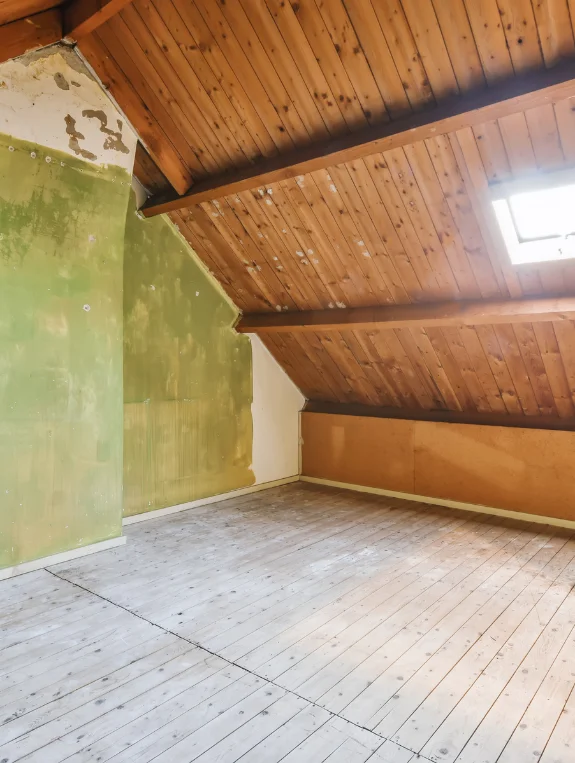
White Beams on a White Ceiling — Visual Unity That Expands
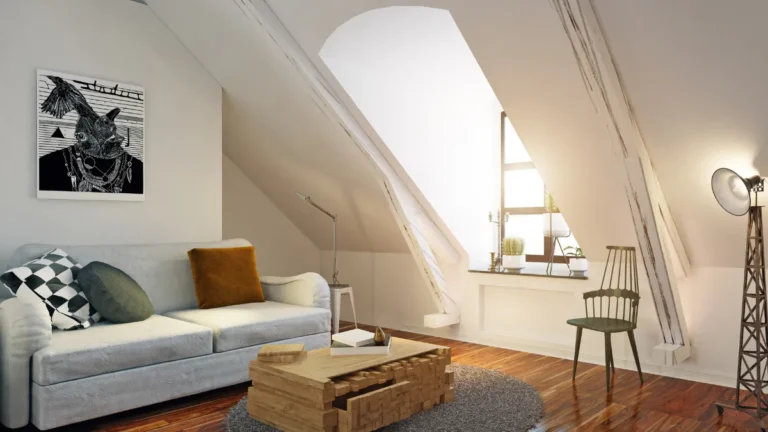
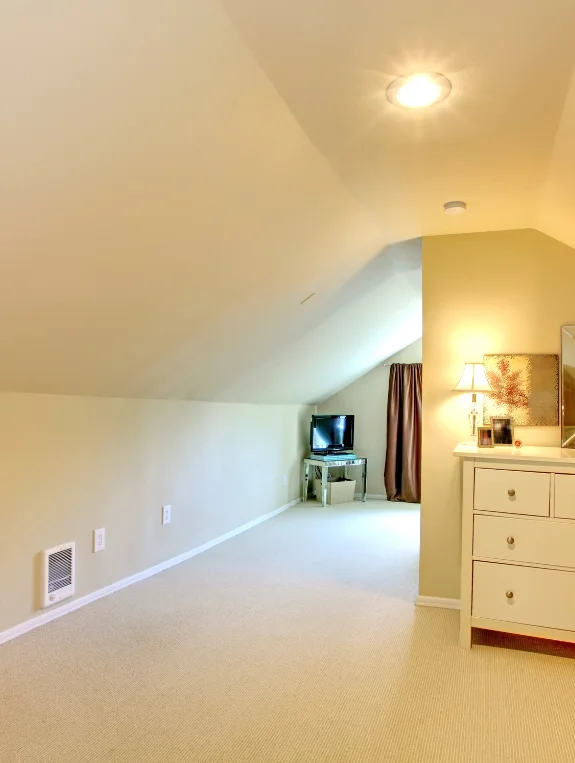
White painted beams on a white ceiling let the beams nearly disappear into the surface around them, and the whole overhead reads as light and receding. Suddenly the slanted ceiling feels higher simply because nothing draws the eye to how close it actually is.
White Ceiling With Dark Beams as Contrast Features
A bright white ceiling paired with dark stained or painted beams makes the beams read as genuine architectural features rather than a low ceiling closing in. The eye starts seeing the beam as furniture, not obstruction, and the room feels taller since the ceiling behind the beam recedes.
The Beam Color That Never Works on Slanted Ceilings
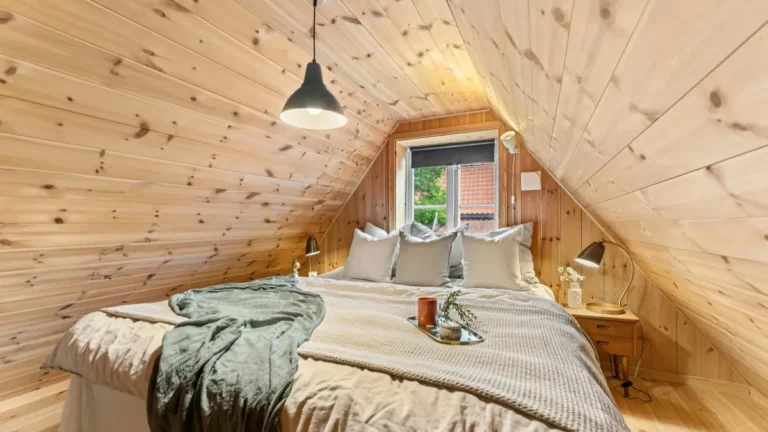
Medium warm brown is the one tone that consistently fails here, not dark enough to contrast, not light enough to recede. It’s the ambiguous middle ground that makes beams look unfinished and the ceiling feel indeterminate, and it reliably makes slanted ceilings look lower.
The Ceiling Color Strategy That Opens the Space
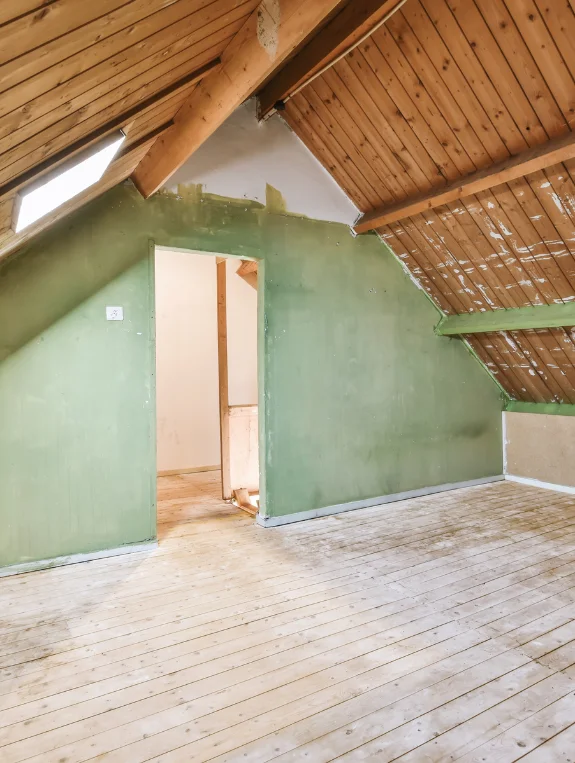
The Lightest Surface Rule for Slanted Ceilings
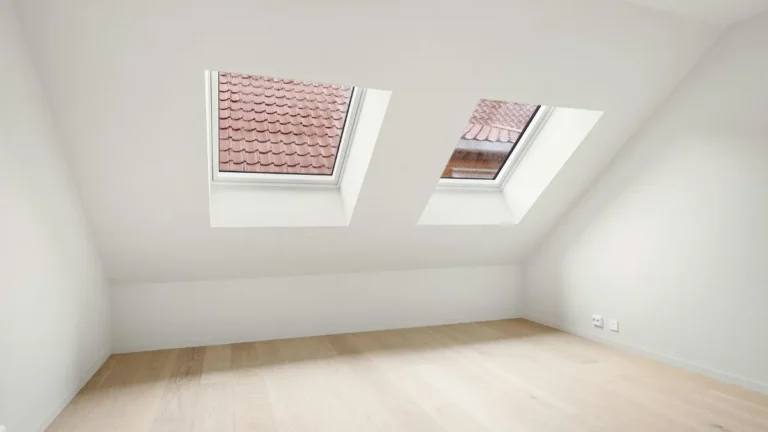
The ceiling should always be the lightest surface in the room, lighter than the walls, lighter than the floor, and lighter than the beams. A light ceiling recedes visually, and the room reads as taller as a direct result.
The Two-Tone Ceiling Approach That Creates Height
A flat ceiling section at the peak in bright white, with sloped sections in a slightly deeper warm white, makes the peak read as higher than it actually is while the slope reads as transitional rather than dominant. It’s a color gradient that creates perceived height.
The Warm Undertone That Prevents White Ceilings Feeling Cold
Cool white ceilings in attic rooms tend to feel clinical and institutional, while a warm white with a yellow or cream undertone feels sheltered and comfortable instead. Benjamin Moore’s White Dove or Farrow and Ball’s All White are both proven choices that read as high rather than harsh.
The Ceiling Finish That Changes Everything
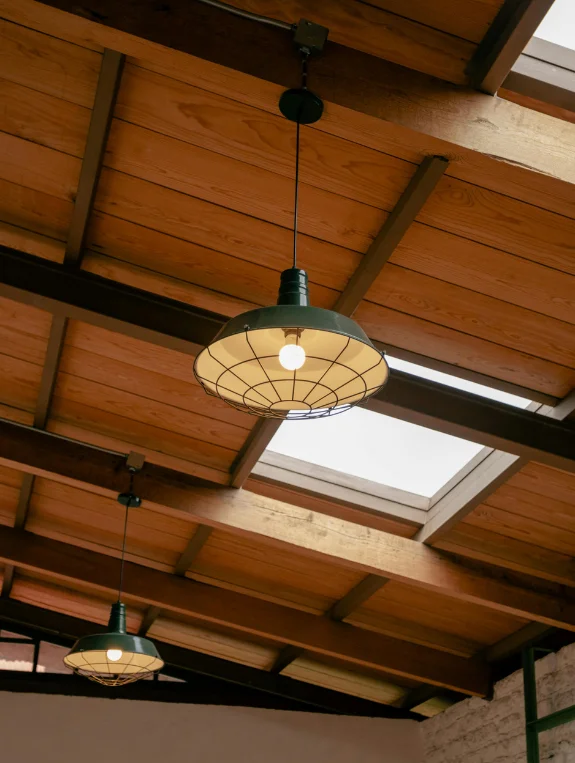
Matte Finish on Sloped Sections — Always
A matte ceiling absorbs light, letting the slope read as quiet and receding, while a gloss or satin finish reflects light straight back at the viewer from the angle of the slope, confirming exactly how close that ceiling really is. Matte really is non-negotiable on any sloped section.
The Micro Texture That Adds Depth Without Adding Weight
A very light texture, a fine sand finish or a subtle lime plaster, catches light differently throughout the day, making the ceiling read as dimensional rather than flat. That sense of dimension is really what creates the perception of distance.
The Limewash Ceiling That Makes Beams Look Intentional
Limewash applied to the ceiling sections between beams creates uneven light and shadow, giving the ceiling a rich, interesting quality while the beams themselves start reading as frames for the limewash panels. A previously claustrophobic ceiling becomes a genuine architectural moment.
The Lighting That Lifts the Claustrophobic Ceiling
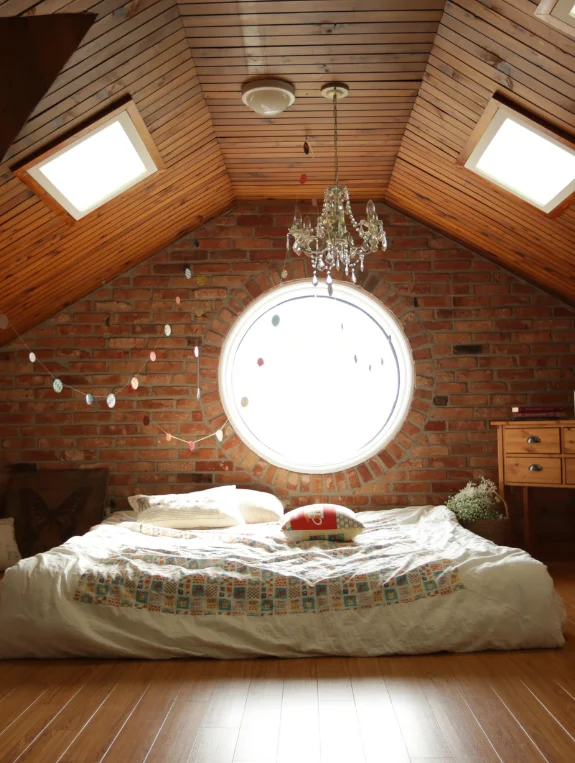
Wall-Mounted Sconces That Direct Light Upward
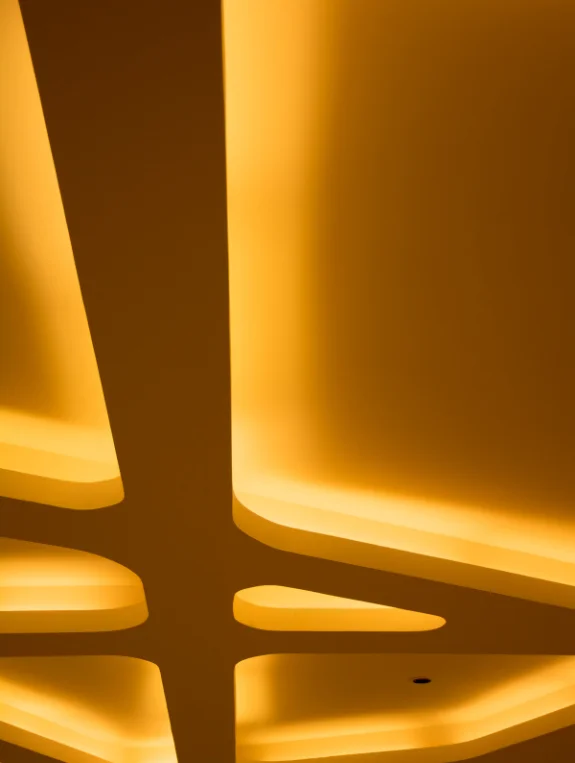
Sconces positioned to throw light upward toward the ceiling slope make the ceiling glow, and a glowing ceiling reads as further away. It’s genuinely one of the most powerful lighting tricks available for a claustrophobic attic ceiling.
LED Strips Along Beam Bases That Wash Light Upward
Warm LED strips along the lower edge of every beam wash light upward across the slope, and a ceiling illuminated from below reads as elevated and atmospheric. The same slope that felt oppressive under downlights can feel genuinely inviting under upward wash lighting instead.
No Downlights in the Slope — Ever
Recessed downlights in a sloped ceiling direct light straight down, confirming exactly how close the slope is, and they require deep cutting into the structure that can compromise its integrity. This is really the one ceiling lighting choice worth avoiding entirely in slanted sections.
The Psychological Factors Behind Claustrophobic Ceilings
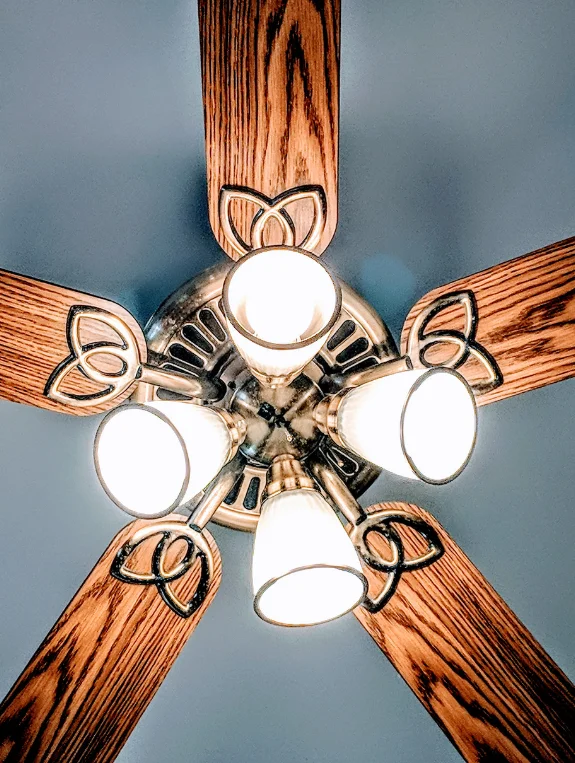
Why the Brain Reads Dark Overhead as Threatening
There’s a real evolutionary response at play here, a dark ceiling pressing down reads as an environmental threat, triggering a sheltering instinct that shows up as discomfort. That same instinct is exactly why a light, open ceiling feels safe and freeing by comparison.
The Visual Horizon That Determines Whether a Room Feels Open
The eye naturally rests at the horizon where walls and ceiling meet, and in a slanted room, that horizon sits low and varies across the space. Lighting and color choices that lift this visual horizon are really the hidden mechanic behind how comfortable an attic room feels.
How Furniture Height Affects Perceived Ceiling Height
Low furniture genuinely makes ceilings feel higher, while tall furniture makes them feel lower. In a room with a claustrophobic ceiling, furniture height is really part of the overall ceiling treatment strategy, not a separate decision.
The Weekend Fix Plan for Claustrophobic Attic Ceilings
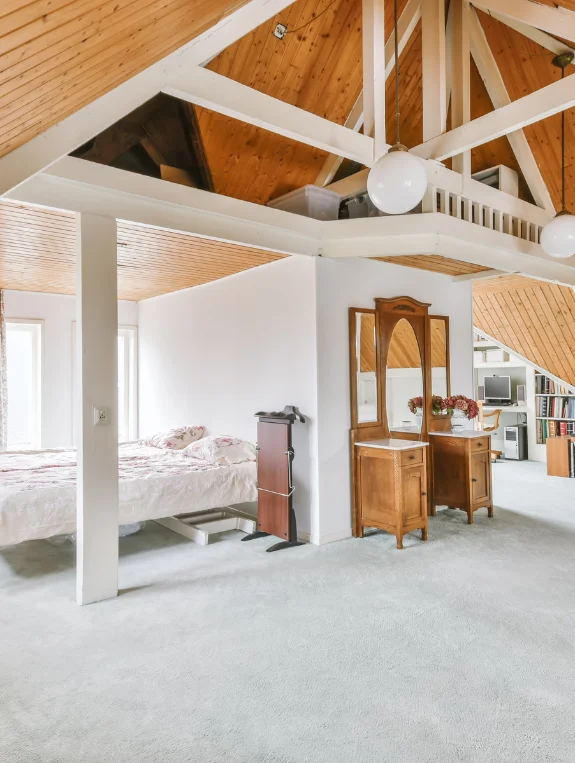
Day 1 — Paint the Ceiling and Beams
Repainting the ceiling white and whitewashing or painting the beams is the fastest, most dramatic fix available, the kind of change that makes a room feel different by Saturday evening.
Day 2 — Change the Lighting Direction
Removing or covering any downlights and installing plug-in upward-facing sconces activates the newly painted ceiling and lets it actually do its job.
Ongoing — The Furniture and Accessory Edit
Replacing any furniture taller than 90cm and removing ceiling-mounted pendants at the lowest point of the room are ongoing adjustments that maintain the opened-up feeling long term.
Where to Find Attic Ceiling Treatment Products
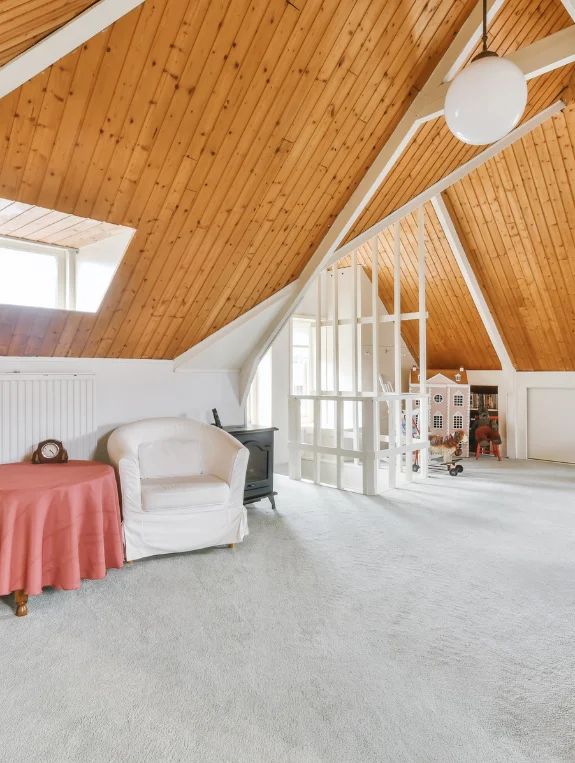
Best Paint Sources for USA UK Canada
Benjamin Moore and Sherwin-Williams cover the USA, Farrow and Ball and Dulux serve the UK, and Benjamin Moore and Sherwin-Williams are both available in Canada as well, all offering warm white ranges suited to sloped ceilings.
Best Sources for Lighting and Beam Treatments
Amazon carries plug-in upward sconces and LED strips, Toolstation in the UK offers affordable LED strip lighting, and Home Depot stocks limewash paint supplies.
Conclusion
A claustrophobic attic ceiling is always a treatment problem, never an architecture problem. A white ceiling lighter than the walls, a beam in a contrasting color rather than matching the ceiling, a matte finish throughout, upward-directed lighting, and low furniture together transform a suffocating attic into a genuinely comfortable retreat.
Painting the ceiling warm white this weekend costs about $30 and is the single fastest, cheapest, most impactful fix available, worth feeling the room open up before changing anything else at all.