
Aesthetic Gallery Attic Wall Layouts With Minimalist Floating Frames Inspiration
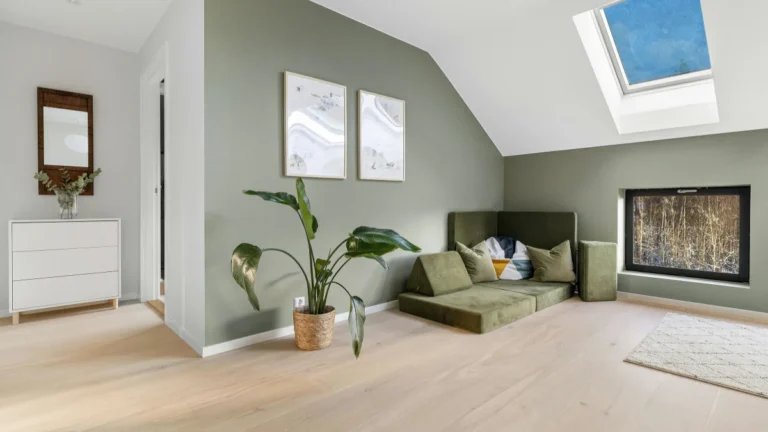
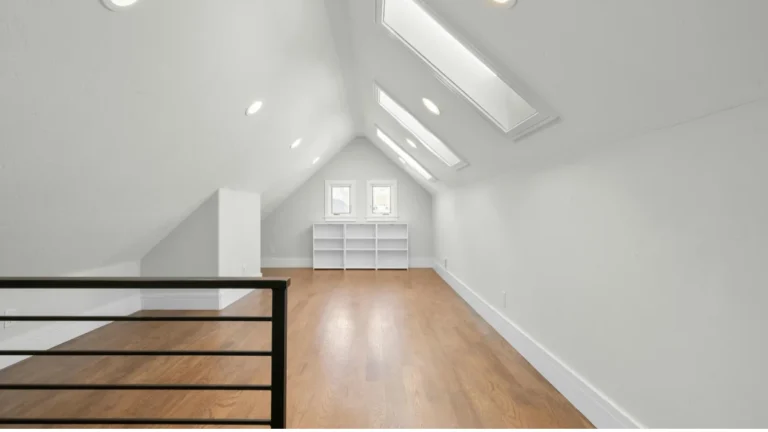
For slanted attic walls, use minimalist floating frames with thin black or light oak borders to keep it light and airy.
Hang them in a clean grid or soft organic cluster on the tallest wall, not on the low slant. Keep spacing even and use mostly neutral art with one warm accent piece.
Floating frames don’t add visual weight so your low attic feels taller and more open instantly. Light tones and negative space keep the gallery calm, intentional, and expensive-looking. It turns your awkward attic wall into a clean, aesthetic, Pinterest-perfect gallery.
Attic Rooms Need Gallery Wall Rules That Flat-Ceiling Rooms Do Not
The Standard Gallery Wall Formula Fails in Attic Rooms Because the Walls Are Not Standard
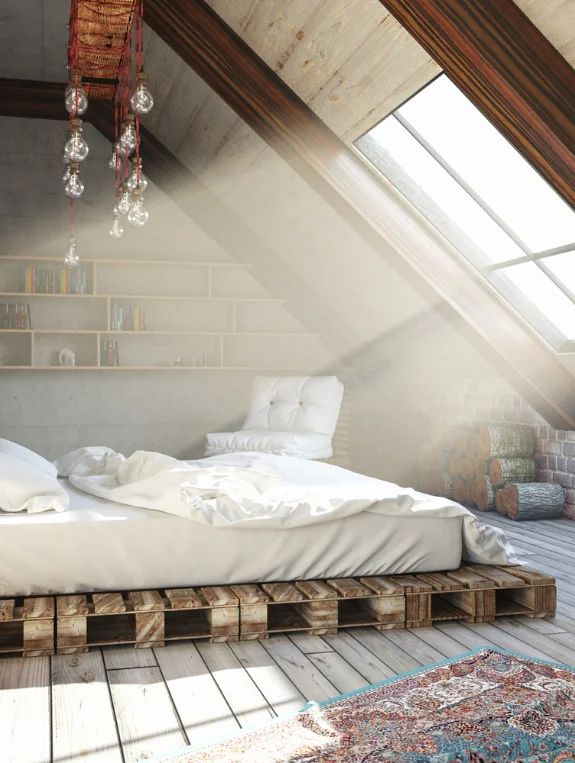
Center the gallery on a flat wall is advice that works in nearly every room except an attic, where few walls are genuinely flat to begin with. An attic gallery wall needs a different approach, one that treats the angles as design assets rather than obstacles to work around.
A Gallery Wall in an Attic Room Creates the Most Personal and Memorable Design Moment in the Home
A slope curving over the gallery, a beam dividing sections, a skylight lighting artwork from above, none of these conditions exist in any other room of the house. Attic rooms genuinely offer a gallery wall opportunity nothing else can replicate.
The Attic Gallery Wall Options at a Glance
The Complete Attic Gallery Layout Guide
- Flat gable end wall gallery, the most straightforward attic gallery position
- Sloped wall linear gallery, a single horizontal line following the slope
- Knee wall gallery at sitting height, artwork positioned for a seated eye level
- Mixed slope and flat gallery, frames crossing both surfaces on a common baseline
- Minimalist single large print, one oversized frame rather than a collection
- Floating ledge gallery, art propped on ledges that can change without new holes
- The triangular gable composition, artwork arranged to echo the gable shape
- Above-bed arc arrangement, a gentle arc that mirrors the headboard curve
The Attic Gallery Layout With the Best Visual Result
Out of every option here, a triangular composition on the flat gable wall delivers the best result by far. The largest piece sits at the center-peak, two medium pieces flank below it, and two smaller pieces finish at the base, letting the architectural shape of the wall itself organize the whole gallery.
The Flat Gable Wall Gallery — The Attic’s Best Canvas
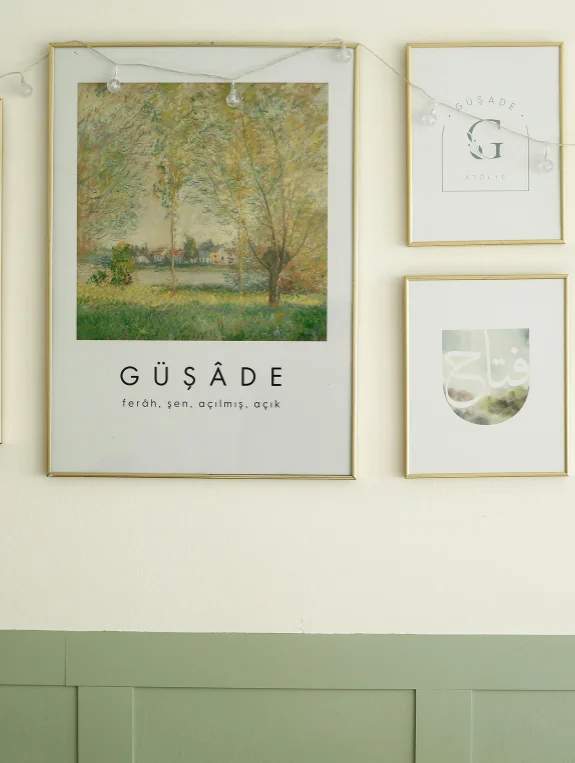
Why the Gable End Wall Is the Most Rewarding Attic Gallery Position
The gable end wall is typically the largest flat surface in an attic room, and it’s the first thing anyone sees on entry. A well-composed gallery here defines the entire character of the room from the moment someone walks in.
The Triangular Composition That Uses the Gable Shape
Mapping the gable wall’s triangle, centering the composition symmetrically, and starting with the largest piece at the center-peak before working outward and downward creates a gallery that reads as deliberately architectural rather than coincidentally placed on a triangular wall.
The Floating Frame Style That Suits Attic Aesthetics Best
Simple thin frames in warm brass or natural wood, or frameless float mounts, recede and let the artwork itself do the talking. In a room with this much architectural character already, the art should support the space rather than compete with it.
The Sloped Wall Linear Gallery

Following the Slope With a Single Row of Frames
One horizontal row of evenly spaced frames, running parallel to the floor rather than following the angle of the slope, creates a horizontal line across an angled wall. The contrast between that horizontal line and the diagonal slope makes both elements more visible and more interesting.
The Consistent Bottom Line Rule That Makes Sloped Galleries Work
Aligning every frame along one consistent baseline, with the bottom edge of each frame sitting on the same horizontal line regardless of size, reads as intentional composition rather than random placement.
Spacing on Slopes That Reads as Considered
Equal spacing between frames, generally 50 to 80mm, reads as measured and intentional. Wider gaps feel more spacious, while tighter gaps feel collected and abundant, and both work depending on the overall attic aesthetic.
The Minimalist Floating Single Frame Approach

When One Large Frame Beats a Full Gallery in Attic Rooms
A single oversized print, at least 80cm by 100cm, centered and properly hung on the flat gable wall, often makes a stronger statement than fifteen small frames competing with an already busy architecture.
The Art Subject That Works Best in Attic Single Frames
Large format botanical photography, abstract warm tone paintings, architectural line drawings, and calm landscape photography all suit the intimate, personal quality of an attic room and read beautifully as a single large statement.
The Float Mount That Makes Large Prints Look Gallery-Quality
A frameless float mount, with the print sitting about 10mm proud of a backing board, gives a considered, expensive-looking presentation for less than the cost of a quality frame.
The Art Ledge System for Flexible Attic Galleries
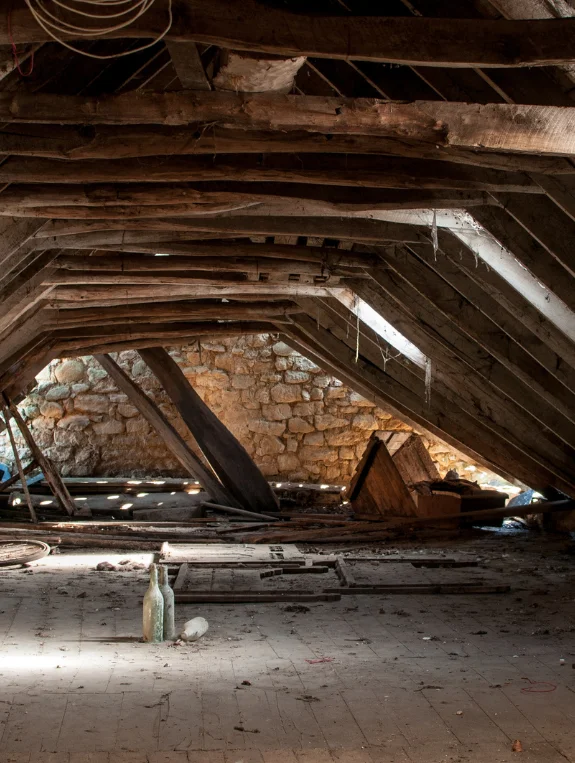
IKEA MOSSLANDA Ledges on Flat Attic Sections
Picture ledges mounted on flat knee wall sections, with prints leaned at varying angles, let a gallery change over time without a single new hole. It’s genuinely the most renter-friendly attic gallery solution available, and the leaned display reads as curated rather than permanently committed.
Layered Ledge Styling That Adds Depth to Attic Galleries
Three ledges at different heights on a flat gable section, with prints propped and slightly overlapping, a small plant tucked between frames, and a candle at the end, reads more beautifully than a flat hung gallery in most attic settings.
Mixing Frames and Objects on Ledges for Attic Character
An art print, a small ceramic piece, a dried botanical, and a book leaned casually against a frame add texture and personal detail. A ledge styled this way ends up looking like the accumulation of a life rather than a purchased collection.
The Frame and Art Choices That Suit Attic Gallery Aesthetics

Consistent Frame Finish Throughout the Gallery
All frames in warm brass, or all in natural wood, or all in matte black, reads as genuinely designed. Mixed frame finishes in a room with already complex architecture tend to create visual overload rather than character.
Art Tones That Complement the Attic Colour Palette
Warm tones throughout, cream, stone, terracotta, sage, read as part of the room rather than imported from somewhere else. Cool tones in a warm attic room tend to create a sense of disconnection instead.
Personal Photographs as the Most Powerful Attic Gallery Element
Printed personal photographs in the chosen frame finish tell a genuine story and create the most intimate, memorable gallery possible. It’s the detail that makes an attic room feel like a real retreat rather than a styled showroom.
Where to Find Gallery Wall Essentials for Attic Rooms
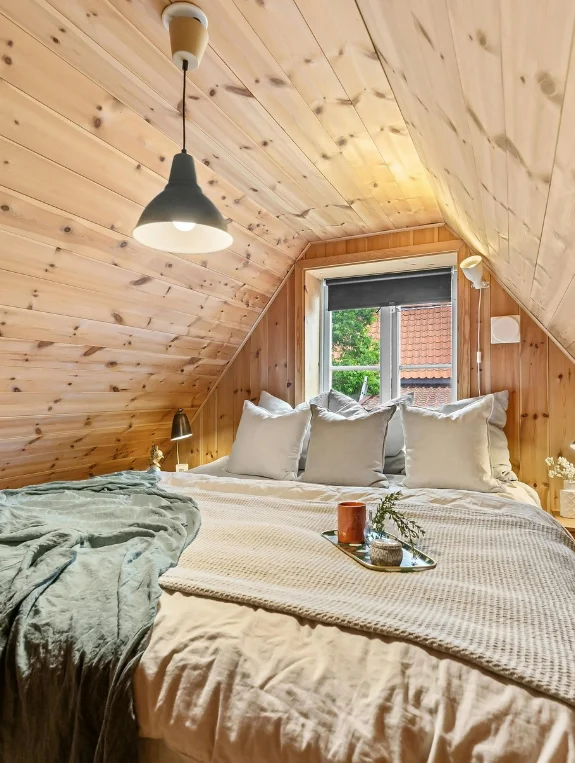
Best Sources for Frames and Ledges
IKEA offers MOSSLANDA ledges and affordable uniform frames, Amazon carries minimalist floating frames in multiple sizes, and West Elm is worth the investment for quality warm brass frames.
Best Sources for Attic-Appropriate Art
Etsy is a strong source for digital downloads in warm tones, Walgreens and Costco offer affordable large format printing, and Minted carries curated art in consistent aesthetics worth browsing.
Conclusion
The attic gallery wall works best when it uses the room’s own architecture as the composition framework. A triangular arrangement on the gable, a linear row following the slope, a single oversized print as the statement, or a flexible ledge system, these four approaches suit the four most common attic wall configurations.
The best place to start is by laying every frame on the floor in the intended arrangement, photographing it from standing height, adjusting as needed, and only then hanging, since that planning step is what makes an attic gallery wall look genuinely professionally composed.