Attic Storage Mistakes Making Your Space Impossible to Use — And the Fixes That Actually Work
If your attic storage feels like a chaotic black hole where nothing is findable, you’re likely making a few costly mistakes. Piling heavy bins in the middle of the floor, using cardboard boxes that attract moisture, and ignoring your slanted walls and eaves are making your attic impossible to actually use.
I’m breaking down the biggest attic storage mistakes that waste space and damage your stuff, plus the simple, affordable fixes that actually work to make your attic organized, accessible, and functional again.
A Full Attic That You Cannot Access Is Not Storage — It Is a Paid-For Landfill

The Attic Filled With Things You Cannot Find Is Costing You Time Money and Space
Every hour spent excavating the attic for one item, every duplicate purchase made because the original couldn’t be found, every cubic foot of space filled with things you can’t retrieve, all of it adds up to a real cost. A chaotic attic costs far more over time than the effort it would have taken to organize it properly in the first place.
Almost Every Attic Accessibility Problem Comes From the Same Group of Mistakes Made During the First Loading
Stacking too deep, no labeling, no clear path, no zones, these are the mistakes made on moving day that quietly compound into years of inaccessible chaos. This post names every one of them and provides the specific fix.
The Attic Storage Mistakes at a Glance

The Complete Chaotic Attic Mistake List
- Stacking boxes floor to ceiling with no access path
- Heavy items placed on top of fragile ones
- No permanent aisle between storage zones
- Cardboard boxes that absorb moisture and eventually collapse
- Zero labeling on opaque boxes and bins
- Seasonal items buried behind rarely used ones
- No protection for dust-sensitive items
- Loose items not contained in any system at all
The Mistake That Creates the Most Chaos
Out of everything on this list, having no permanent aisle through the attic causes the most damage over time. Without a clear path maintained as sacred space, every single access session requires moving things just to reach other things. Within a year of loading, most attics become completely inaccessible from the back.
Mistake 1 — The Inaccessible Back Half of the Attic
Why Most Attics Become Inaccessible Within Two Years of Use
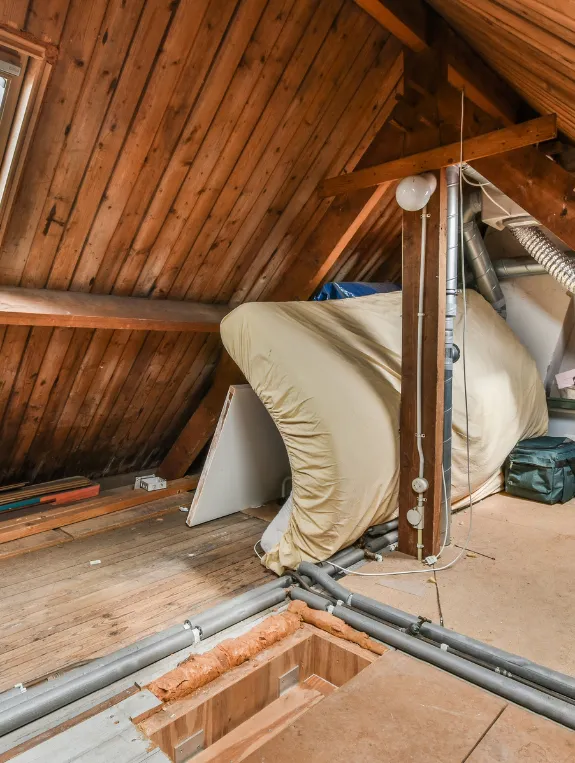
Items stored without an access path mean the first things loaded in become the last things accessible. Over time, new items fill the front while the back becomes genuinely unreachable. It’s not unusual for someone to realize they haven’t actually seen the back of their attic in four years.
The Permanent Aisle That Must Be Established Before Loading Anything
A minimum 600mm wide clear aisle running from the entry hatch to the back wall, maintained as space that’s never filled with boxes, makes every single item in the attic accessible without needing to move anything else out of the way first.
The Zone Map That Prevents Future Chaos
A simple hand-drawn map of the attic divided into zones, seasonal, rarely used, archived documents, posted right at the hatch, tells every family member exactly where things live and where to look without needing to ask.
Mistake 2 — Wrong Containers That Fail in Attic Conditions

Why Cardboard Boxes Are the Wrong Attic Storage Container
Attic temperatures across the USA, UK, and Canada can swing from below freezing to over 40C through the year. Cardboard absorbs moisture during damp phases and becomes brittle during hot dry ones. It collapses under load and offers zero real protection against the dust that settles in every attic over time.
The Container Material That Survives Attic Temperature Swings
Rigid polypropylene bins with secure lids don’t absorb moisture, don’t become brittle in extreme cold, and don’t collapse under load. It’s genuinely the only container material that reliably protects attic contents year after year.
The Lid Type That Prevents Dust Penetration
Clip-lock lids create a much tighter seal than simple press-fit lids, keeping dust off stored textiles and electronics entirely. It’s a small difference in lid design that meaningfully protects the value of whatever’s inside.
Mistake 3 — Dust Trapping That Ruins Stored Items
How Dust Accumulates in Uninsulated and Insulated Attics
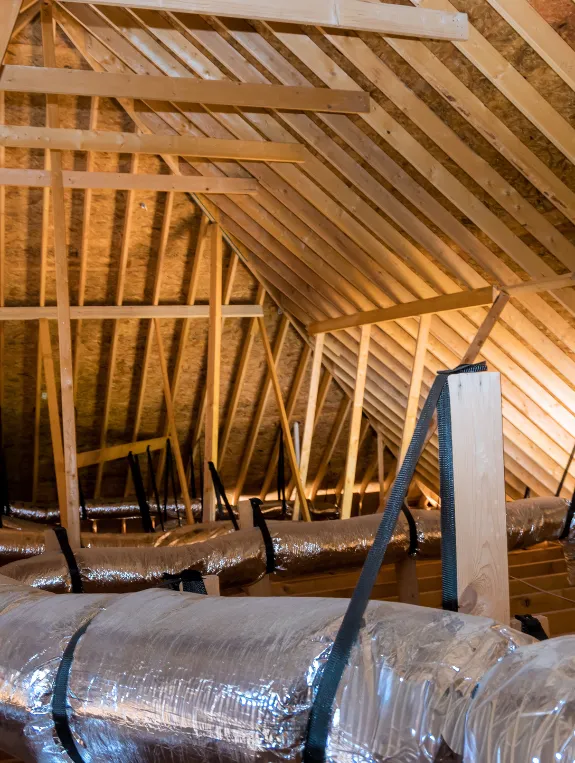
Attics are naturally high-dust environments, between insulation fibers and airborne particulates drawn in through soffit vents, fine dust settles on every uncovered surface month after month. Over years, that dust is what ruins textiles, causes electronics to fail, and makes stored clothing unwearable.
The Dust Protection System for Stored Textiles
All textiles, clothing, bedding, curtains, should go into sealed vacuum bags before being placed in bins. That double layer of protection keeps dust out and moisture out at the same time, delivering items that are still genuinely wearable years later.
The Electronics Dust Protection That Most People Miss
Electronics stored in sealed anti-static bags inside rigid clip-lock bins get protection against dust, moisture, and static damage all at once. This specific combination is what determines whether electronics actually work when retrieved, or fail quietly after years in storage.
Mistake 4 — Heavy Items on Top Destroying What Is Below

Why Stacking Heavy Boxes on Top Is the Most Damaging Storage Mistake
Heavy items compress fragile ones stored underneath them, boxes collapse, and contents break, often without anyone noticing until the item is actually needed again. It’s a mistake that damages things silently over months or years.
The Weight Rule That Prevents Structural Damage
Heavy items should always sit at the bottom, and boxes should never be stacked more than three high. Keeping the heaviest boxes at floor level prevents collapse and protects everything stored above them.
Shelving That Eliminates the Stacking Problem Entirely
Freestanding shelving units solve this problem structurally, since each shelf holds one layer of boxes with nothing stacked directly on top of anything else. It’s an approach that makes the heavy-on-fragile mistake essentially impossible.
Mistake 5 — No Labeling That Makes Everything Inaccessible
Why Opaque Unlabeled Boxes Are as Good as Empty
An unlabeled bin requires opening just to identify what’s inside, and in an inaccessible attic, that often means moving five boxes just to open the sixth. That small time cost compounds into hours per year, and eventually into simply avoiding the attic altogether.
The Labeling System That Works for Every Attic
One adhesive label on the top and one on the front of every bin, with the category in large text and specific contents listed in bullet points below, along with color coding by zone, makes any bin identifiable from any angle without moving a single thing.
The Digital Photo Index That Solves the Problem Once
Photographing the contents of every bin before sealing it, then uploading those photos to a shared phone album or simple spreadsheet with the bin number attached, turns searching the attic into searching a photo album instead. It’s five minutes per bin that saves hours every single year.
Mistake 6 — Seasonal Items Buried Behind Permanent Storage
Why Christmas Decorations Behind Archive Files Is a Design Failure
Storing items accessed annually behind items accessed almost never inverts the whole logic of accessibility. It’s genuinely common to find the Christmas tree buried behind archive boxes that haven’t been opened in eight years.
The Seasonal Zone at the Front That Fixes Annual Access
Placing all regularly accessed seasonal items, Christmas decorations, Halloween items, seasonal clothing, at the very front of the attic closest to the hatch means they can be retrieved without disturbing any other zone at all. This one placement decision turns seasonal retrieval into a five-minute job instead of an afternoon.
The Access Frequency Map That Should Organize Every Attic
Most-accessed items belong closest to the hatch, occasionally accessed items in the middle, and never-accessed items at the very back. This frequency-based logic keeps every attic efficient, regardless of exactly how the contents themselves get organized.
The One-Day Attic Reset That Fixes Every Mistake
The Empty-First Approach That Is the Only Real Fix
Removing everything from the attic completely, sorting it at the bottom of the stairs, and donating, discarding, and returning only what’s genuinely still needed is really the only way to fix a chaotic system. Reorganizing chaos in place never quite works the same way.
The Reload Sequence That Prevents the Chaos Returning
Establishing the aisle first, placing shelving units, loading the heaviest items onto the bottom shelves, labeling every bin before it goes back up, and setting the seasonal zone at the front, in that order, produces an attic that stays organized long after moving day.
The Annual 30-Minute Review That Maintains the System
Once a year, removing three to five items for donation, checking that labels are still readable, and confirming the aisle is still clear is a small maintenance session that prevents the slow, gradual drift back toward chaos.
Where to Find Attic Storage Organization Products

Best Sources for Quality Attic-Appropriate Containers
Amazon carries clip-lock rigid bins in multiple sizes, the Container Store offers premium organization systems, and IKEA has affordable shelving that adapts well to attic use.
Best Sources for Labeling and Index Systems
Amazon carries label makers and adhesive label packs, Avery offers printable large format bin labels, and a simple smartphone photo album works perfectly well as a digital content index.
Conclusion
A chaotic attic is really just organized chaos, the system was wrong from the very start. A permanent aisle, rigid clip-lock containers, dust protection layers, heavy items kept at the base, labels on every bin, and a seasonal zone at the front are the six principles that turn a chaotic attic into a genuinely useful storage space.
The only real fix is emptying it completely once and reloading it using this system, one day of work that makes every future trip to the attic effortless from then on.