The Cluttered Apartment Kitchen Survival Guide: A Systematic Approach to Solving the Problem for Good
Hey friend!
I used to avoid cooking altogether simply because my tiny rental kitchen felt like a cluttered mess.
Counter space was non-existent, pots were avalanching out of cabinets, and every organization hack I tried only lasted three days.
I’m sharing my step-by-step system to reclaim a cluttered apartment kitchen for good—from vertical storage tricks and clear-counter rules to budget Amazon finds that actually double your cabinet space without losing your mind.
Kitchen Clutter Is Not a Willpower Problem — It Is a Systems Problem
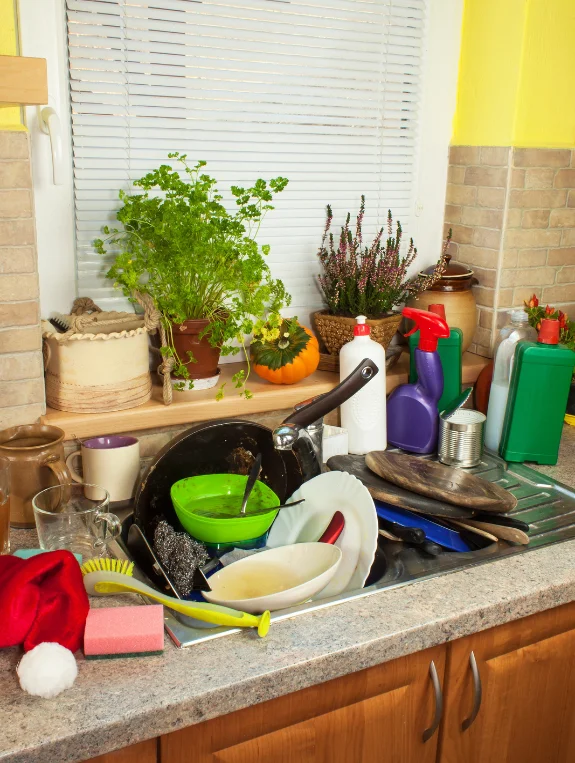
Your kitchen is cluttered because the system is wrong or missing. Not because you’re lazy or disorganized. The right system makes organization automatic. The wrong system makes clutter inevitable.
Organize your newly cleared counters using simple small apartment kitchen decor formulas
Every Cluttered Kitchen Has the Same Root Cause — Too Many Things and Not Enough System
The kitchen is not cluttered because you are disorganized. It is cluttered because the system is wrong or missing. The right system makes organization automatic and effortless.
This Guide Does Not Tell You to Declutter — It Gives You the Complete System That Prevents Clutter From Returning
Decluttering alone never solves kitchen clutter. The clutter returns in three weeks because the system that allows clutter has not changed. This guide changes the system.
The Cluttered Kitchen System That Solves Every Problem
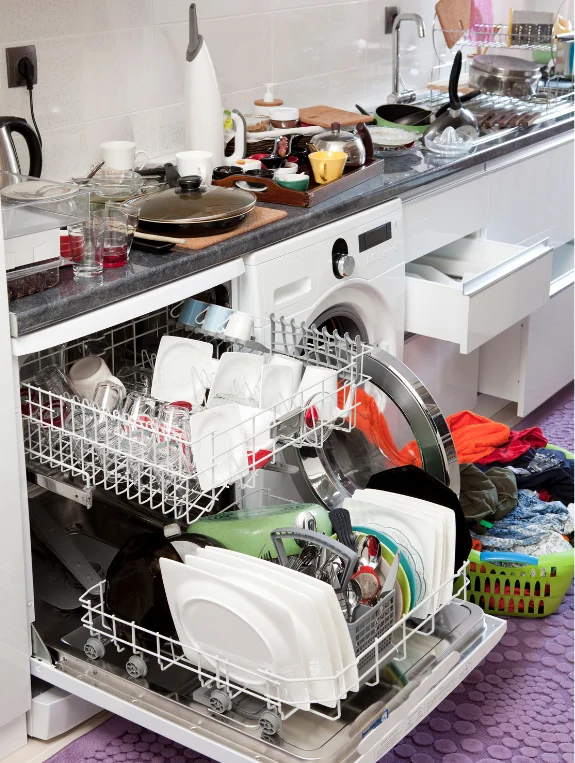
- Phase 1: Everything out—remove every item from every cabinet, drawer, and counter completely
- Phase 2: Category sort—group everything by category: cooking tools, baking, pantry, cleaning supplies
- Phase 3: Honest declutter—one trash bag of things not used in six months
- Phase 4: Zone assignment—every category gets a home near where it’s used
- Phase 5: Container system—every zone gets a container that fits with room to spare
- Phase 6: Label everything—every container, shelf, drawer labeled clearly
- Phase 7: Counter clearing—only three categories allowed on counter: appliances, plants, one beautiful object
- Phase 8: Return policy—every item used must be returned to its zone before the next meal
- Phase 9: Weekly reset—10 minutes every Sunday returning everything that drifted
- Phase 10: Monthly audit—one item leaves for every new item that enters
The System Step That Prevents Clutter From Returning
The return policy: every item used must be returned to its designated zone before the next meal. This single rule prevents the drift and accumulation that creates kitchen clutter. Without it, every organization effort eventually fails.
Phase 1 and 2 — The Empty and Sort That Reveals the Real Problem
Your kitchen probably has way more stuff than you realize. Most people don’t understand their clutter problem until they see everything pulled out at once.
That’s when the real work begins—not deciding what to buy or where to put things, but understanding exactly what you have and why it’s there.
Maintain an uncluttered look long-term by adopting warm minimalist apartment kitchen decor
Why Organizing Without Emptying First Always Fails
Organizing items in place means working around existing systems rather than building new ones. Emptying completely reveals how much is actually there. Most people are shocked by the quantity revealed during the empty phase.
The Category System That Makes Sorting Obvious
Cooking tools, baking supplies, pantry dry goods, canned goods, cleaning supplies, small appliances, seasonal items.
These seven categories cover everything in any kitchen. Group every item into one category during the sort. The system becomes obvious immediately.
The Quantity Revelation That Makes Decluttering Easy
Seeing all items in a category together makes duplicates obvious. Four spatulas become clearly visible when grouped. One trash bag of duplicates, outdated items, and never-used tools leaves without guilt when the quantity is obvious.
Phase 3 and 4 — The Declutter and Zone Assignment That Creates the System Foundation

Decluttering isn’t about being ruthless. It’s about being honest. Has this actually been used in the last six months? Not could it be used. Actually used. If the answer is no, it goes. This simple question removes the guilt and keeps only what works.
The Honest Declutter Question That Removes the Right Items
Has this been used in the last six months? Not could it be used, actually used. If the answer is no it goes in the bag. The kitchen that only contains things actually used in the last six months is possible to keep organized.
The Zone Assignment That Makes Organization Automatic
Everything used during cooking lives beside the stove. Everything used during prep lives at the prep counter.
Everything used for baking lives in one dedicated cabinet. Zone assignment means every item has a home near where it’s needed. This is the foundation that makes everything else work.
The Frequency Rule That Determines Storage Location
Daily items go in the most accessible locations at eye and hand height. Weekly items go in upper or lower cabinets with slight reaching.
Monthly or seasonal items go in the least accessible locations. Frequency determines height and determines whether you’ll actually maintain the system.
Phase 5 and 6 — The Container and Label System That Maintains Organization
Without containers, items drift. They spread across surfaces, mix with other categories, and resist being returned to their homes.
Containers create physical boundaries that keep categories separated automatically. Labels remove the decision of where things go.
Bring warmth into your newly decluttered space with sage green and gold kitchen decor
Why Containers Are Essential Architecture, Not Optional
Items without containers drift. They spread across surfaces, mix with other categories, and resist being returned.
Containers create physical boundaries that keep categories separated and organized automatically.
The Container Types That Work Best for Each Kitchen Category
Clear stackable bins for pantry items. Drawer dividers for utensils and tools. Pull-out organizers for under-sink cleaning supplies.
Matching jars for dry goods on open shelves. The right container for each category makes the system function effortlessly.
The Label System That Removes Decision Fatigue
Every container labeled. Every shelf labeled. Every drawer labeled.
When every item has a labeled home, the decision of where things go is made once and never needs to be made again. Labels are the system that makes itself automatic.
Phase 7 — The Counter Clearing That Transforms the Kitchen Immediately

Your kitchen counter is not storage. It’s workspace. Every item on the counter that isn’t used daily is preventing you from cooking, which is why kitchens stay cluttered. Clear the counter. Keep only what you use every single day.
The Three Category Rule That Determines What Lives on Counter
Daily-use appliances—coffee maker, toaster if used daily. Plants. One or two beautiful objects. Nothing else. This rule makes the counter clearing decision automatic and permanent.
The Appliance Audit That Identifies Counter Thieves
List every appliance on the counter. Ask how many times each was used in the last week. Anything used fewer than three times per week gets moved to a cabinet or closet. Daily use earns counter residency. Weekly use does not.
The Visual Calm That Cleared Counters Create
A cleared counter is not just aesthetically better. It’s functionally better. Actual cooking requires counter workspace. A cluttered counter prevents cooking, which perpetuates the fast food and takeout cycle that keeps kitchens cluttered.
Phase 8 and 9 — The Return Policy and Weekly Reset That Prevent Relapse

The return policy is the single most important rule. Every item used must be returned to its designated zone before the next meal is prepared.
Not before bed. Not at the end of the day. Before the next meal. This specific timing prevents accumulation at every meal.
The Return Policy That Maintains Everything Else
Every item used must be returned to its designated zone before the next meal is prepared.
This specific timing prevents accumulation at every meal. The return behavior, practiced consistently, becomes automatic within three weeks.
The 10-Minute Sunday Reset That Catches Drift
Every Sunday spend 10 minutes returning anything that drifted from its home during the week. Wipe all surfaces.
Check that containers are organized. The weekly reset catches small drift before it becomes big clutter.
The Visual Cue That Triggers Return Behavior
A small sign at the counter edge that says return before cooking activates the return behavior until it becomes habitual. The habit forms within 21 days of consistent practice. Visual cues work.
Phase 10 — The Monthly Audit That Keeps the System Permanent
The final phase prevents the slow creep that destroys organization systems. One in, one out. Every new item that enters requires an old item to leave.
The system stays at capacity and never exceeds what it was designed to hold.
The One In One Out Rule That Prevents Gradual Return
Every time a new kitchen item enters, one old item must leave. New pan, old pan goes. New storage container, old container goes.
The total quantity stays constant and the kitchen never exceeds design capacity.
The Monthly Expired Item Check That Prevents Pantry Clutter
First Sunday of every month check every pantry item for expiration. Expired items go immediately. The space they occupied becomes available for items that belong there. The pantry audit takes 15 minutes.
The Seasonal Audit That Refreshes the System
Spring and fall audit every cabinet. Assess what’s being used and what has changed in cooking habits. Reorganize zones if usage patterns have shifted. The semi-annual audit keeps the system responsive to actual kitchen use.
Where to Find the Best Kitchen Organization Products

Best Sources for Containers and Organizers
Amazon for extensive selection of stackable bins, drawer dividers, and pull-out organizers. Container Store for professional-grade kitchen organization systems. Target for affordable attractive containers that look as good as they function.
Best Sources for Labels and System Maintenance
Amazon for label makers and pre-made label sets. Target for chalkboard labels and adhesive accessories. Container Store for the highest quality label systems that last.
Apply practical layout strategies across your entire home using modern apartment decor formulas
Conclusion
A cluttered kitchen isn’t a willpower problem—it’s a system problem. Following key phases like emptying, sorting, decluttering, zoning, containing, and maintaining will solve kitchen clutter permanently.
Start this weekend by emptying every cabinet and sorting items by category to see what you actually have. Once you fix the system, the clutter won’t come back!