Make Small Apartment Living Rooms Look Professionally Designed on Any Budget
Hey friend!
Trying to make a small apartment living room look high-end on a strict budget can feel super overwhelming—especially when Pinterest makes everything look like it costs a fortune.
I used to think a professionally designed space required a massive interior design budget. But once I learned a few simple layout and styling formulas, everything changed.
I’m sharing the exact design secrets—from proper furniture scaling and smart focal points to budget-friendly decor tricks—that will make your small apartment look like a high-end designer built it, without spending a ton of cash!
The Secret Designers Do Not Want You to Know About Small Spaces
Professional designers use the same three or four composition formulas over and over in small spaces because they work. These aren’t secrets. They’re just not commonly known. This post reveals all of them.
Opening up tight floor space becomes much easier when you pair visual expansion tricks with clutter-free seating ideas for small living rooms
Expensive Looking Small Living Rooms Follow a Formula Not Luck
Professional designers use the same three or four composition formulas over and over in small spaces because they work.
These are not secrets—they’re just not commonly known. This post reveals all of them. Once you understand the formulas, expensive-looking design stops being luck and becomes choice.
The Difference Between a Designed Small Space and a Cramped Small Space
Square footage does not determine expensive-looking. The arrangement, the lighting, the scale of pieces, and the use of negative space do.
These are all choices you can make. One or two smart decisions transform a cramped space into a designed one.
The Four Design Formulas That Make Any Small Living Room Look Intentional
Here are the formulas designers use. These work because they’re built on psychology and proportion.
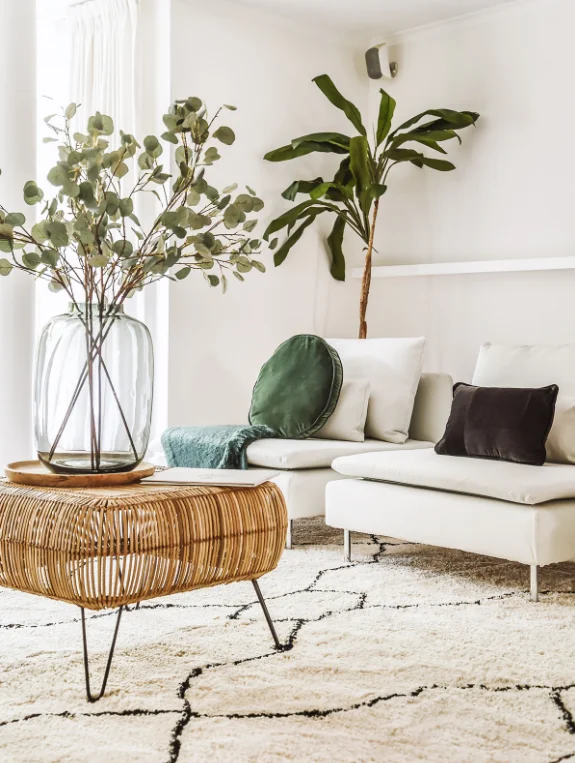
The Small Living Room Design Formulas That Work Every Time:
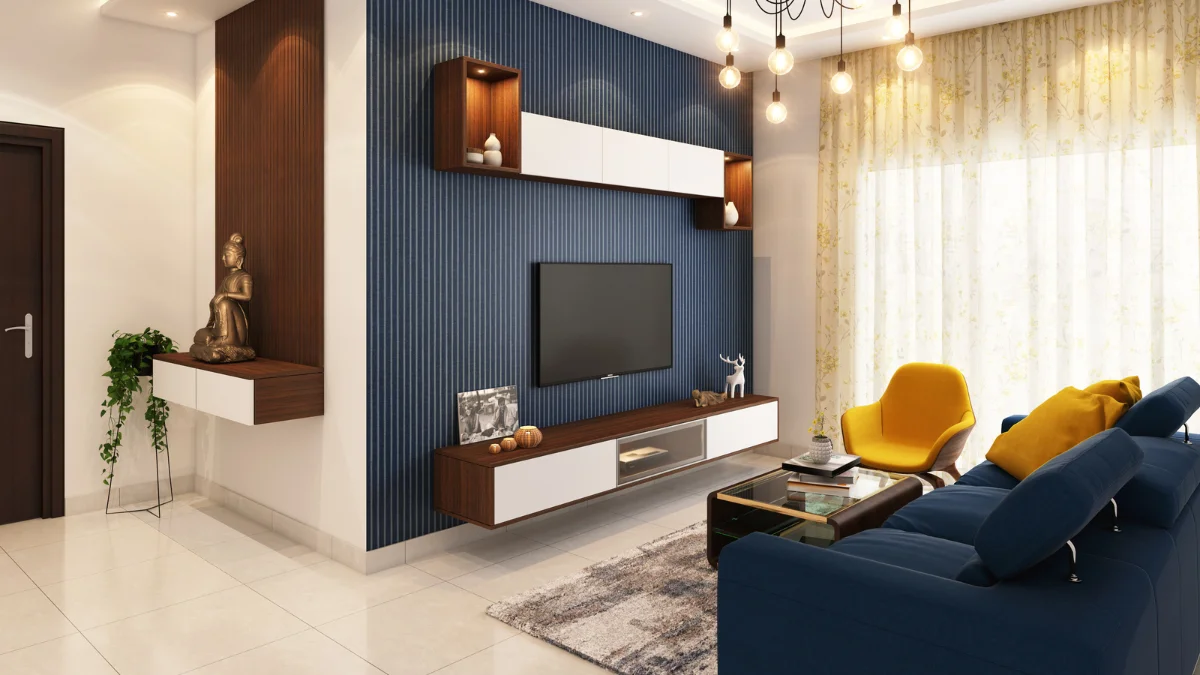
- Formula 1: The Statement Piece Anchor — One statement sofa OR one large art print OR one tall plant — everything else supports it
- Formula 2: The Proportion Rule — One large piece per room, scale up from smallest apartment size, not down
- Formula 3: The Breathing Room Method — 40 percent of surfaces completely empty, 60 percent used intentionally
- Formula 4: The Light Layering System — Three different light heights, zero overhead light, warm temperature only
- Formula 5: The Color Story — Maximum three colors throughout the whole space, they work together, not compete
- Formula 6: The Focal Point Navigation — Eye knows where to land first, second, third — no visual confusion
- Formula 7: The Material Mix — Mix textures, keep materials warm, do not clash finishes
- Formula 8: The Negative Space Principle — Empty wall, empty floor, empty shelf count as design elements
- Formula 9: The Unified Palette — All artwork, all textiles, all metals in the same temperature (warm or cool)
- Formula 10: The One Point of Interest Per Surface — One wall all art or one wall all plants, never mixed
The Most Important Formula That Most People Skip
The statement piece anchor. Every expensive-looking small living room has ONE thing that commands attention—and everything else supports it. This single choice is the difference between designed and chaotic.
Formula 1 — The Statement Piece That Commands the Room Without Overwhelming It
Your anchor piece defines everything else. Here’s how to choose it and build around it.
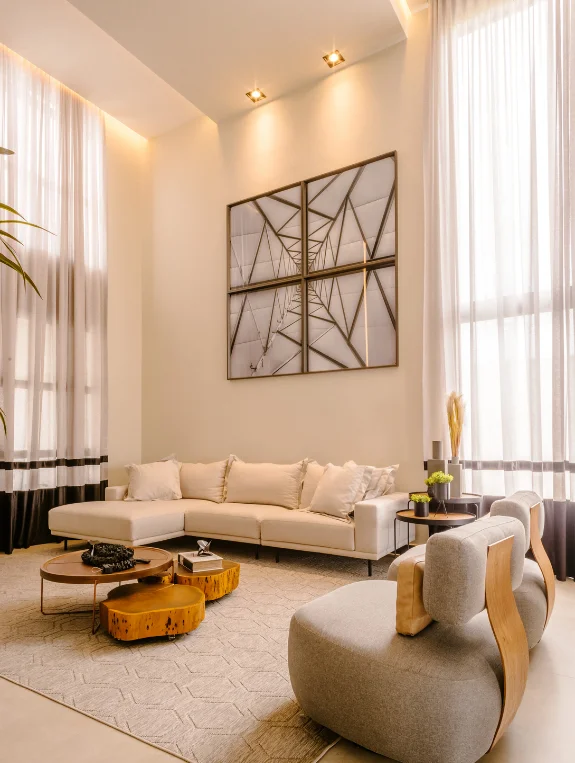
Why One Powerful Choice Costs Less Than Ten Weak Ones
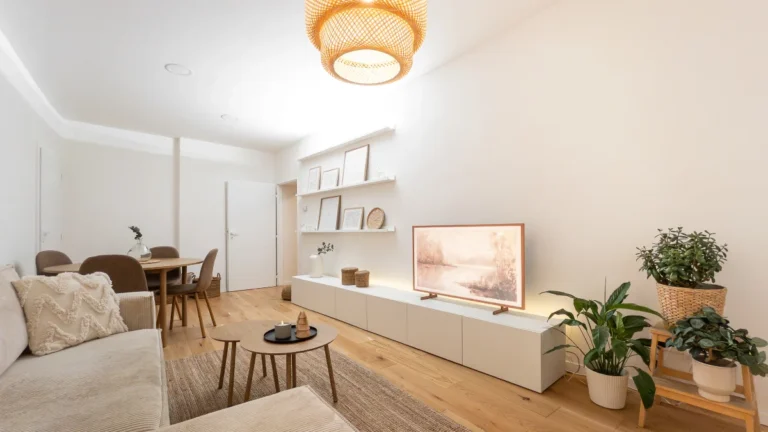
A single beautiful cream linen sofa on a jute rug with minimal accessories costs less than a small sofa plus side table plus storage units trying to fill the space. The expensive-looking choice is almost always the smaller number of pieces.
Picking an open-leg or low-profile sofa works wonders for spatial depth; find the right fit with these apartment couch ideas for narrow spaces
What Makes a Statement Piece Actually Statement Making in a Small Space
Scale matters. An oversized art print, a tall architectural plant, a quality sofa in the right color—these pieces look expensive because they’re confident. They know what they are and they don’t apologize for taking up space.
The Formula — Find Your One Statement Piece Then Build Everything Around It
Everything else in the room should support this piece. Lighter colors if the piece is dark, lighter furniture if the piece is substantial. Unity through service to the statement piece. The room becomes about support, not competition.
Formula 2 — The Proportion Rule That Makes Small Spaces Look Expensive
This is the counter-intuitive formula that changes everything. Scale up, not down.
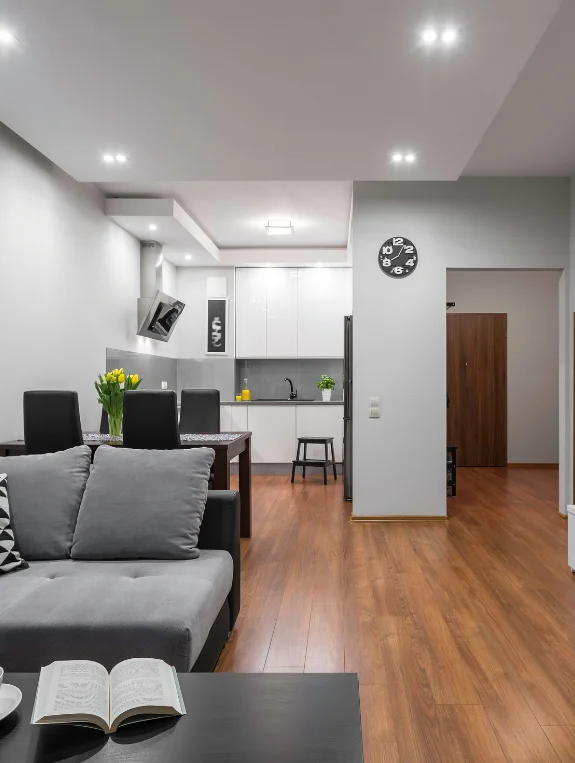
Why Most Small Living Rooms Look Like Furniture Dollhouses
Tiny furniture is the fastest way to make a small space look small. Designers scale up, not down, in small spaces because scale signals confidence and intentionality. A tiny sofa in a small room looks cramped. A full-size sofa in a small room looks chosen.
The Counter-Intuitive Truth About Small Space Furniture Sizing
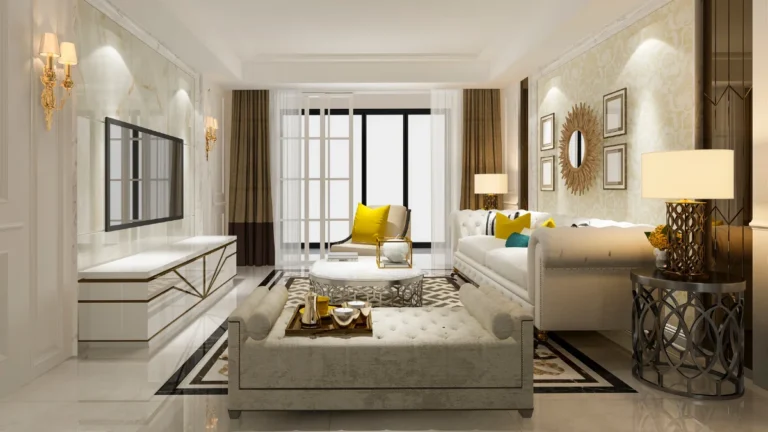
A large sofa in a small room looks more expensive and more intentional than a small sofa in a small room. The brain registers the large sofa as chosen, not forced into the space. This is the opposite of what most people think.
Large furniture makes small spaces feel designed.
The Formula — Take the Furniture Scale You Would Use in a Large Room and Use It in the Small Room
The same size sofa, the same size coffee table, the same size art—just arranged more intentionally with more space around it. The result looks designed, not cramped. Proportion creates the illusion of spaciousness.
Formula 3 — The Breathing Room Method That Creates Perceived Space
Empty space isn’t wasted space. It’s the most powerful design element you have.
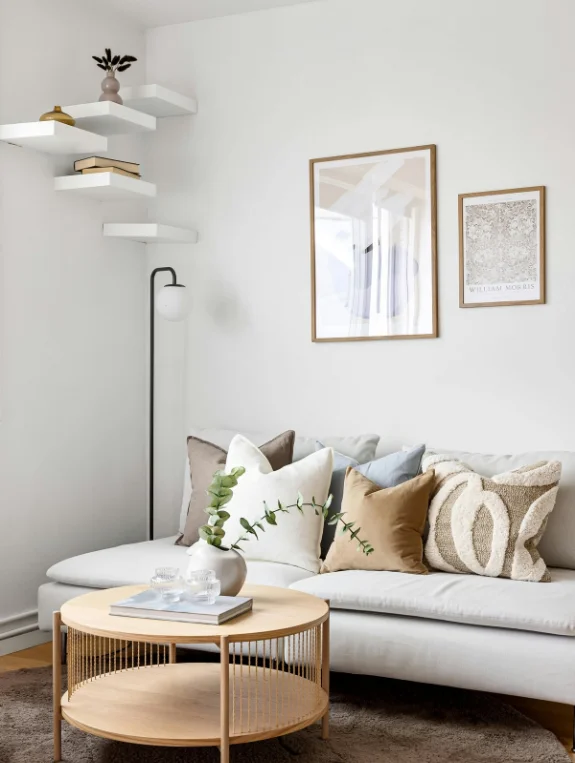
Why Empty Space Is the Most Luxurious Design Element in a Small Living Room
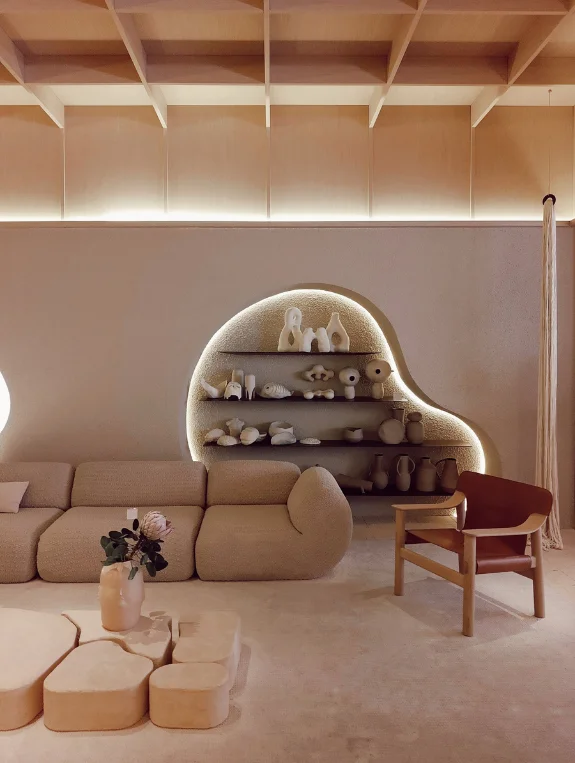
A room that is 60 percent full and 40 percent empty space reads as intentional luxury. A room that is 100 percent full reads as storage. The brain registers empty space as a sign of intentionality and means.
Maintain an open feel while adding inviting textures through these warm minimalist apartment decor ideas
The Specific Surfaces That Should Stay Completely Clear
Nightstands should have one lamp, one book maximum. Coffee tables should be empty or hold one object. Shelves should have one plant, one object maximum. This sparseness is what makes small spaces look designed.
The Formula — Remove Everything Then Add Back Only What Genuinely Serves the Space
Start with empty, then add thoughtfully—rather than full, then edit down. The empty room is the true version. The full room is the decorated version. The empty room is the honest one.
Formula 4 — The Light Layering System That Elevates Everything
Lighting transforms spaces more than any other single element. Here’s the designer formula.
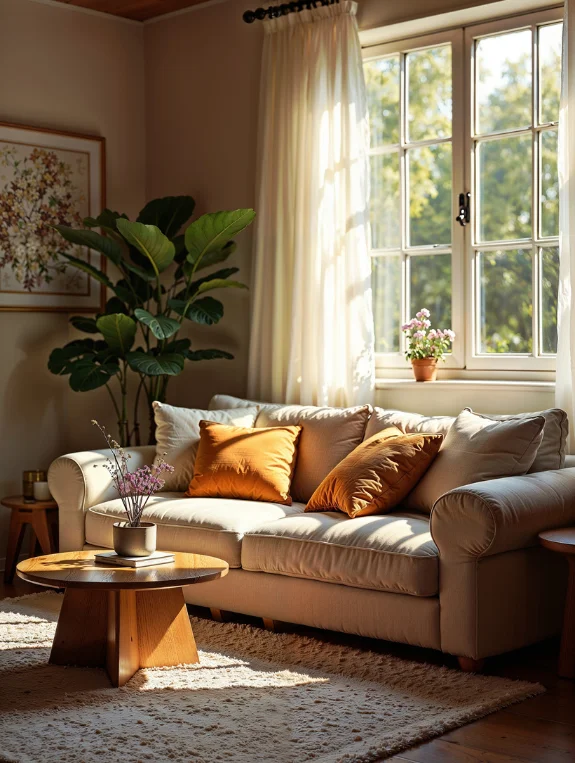
Why Expensive Looking Spaces All Have Perfect Lighting
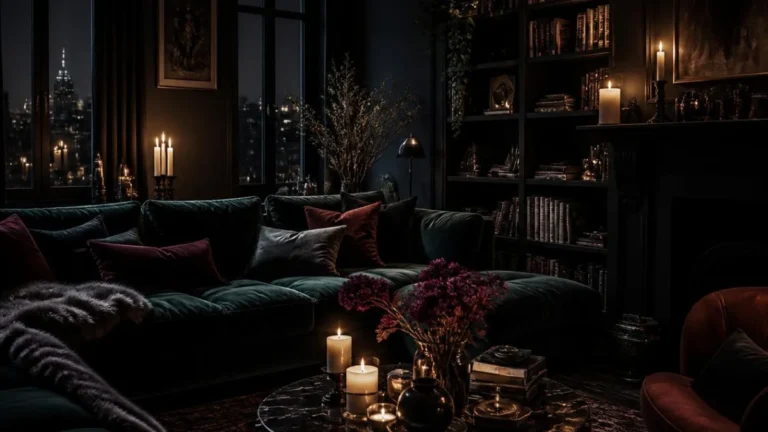
Harsh overhead light makes any space look cheap and utilitarian. Layered warm light at different heights makes any space look expensive and intentional. Lighting is the fastest way to expensive-looking. It’s the first thing designers fix.
The Specific Layering That Works in Every Small Living Room
Floor lamp in the corner, table lamp on the side table, string lights or wall sconces creating a third light level, overhead light permanently off.
This setup costs under $50 and makes everything else look three times better. Three light sources, three different heights.
The Formula — Three Light Heights All Warm Temperature All at Different Brightness Levels
Allows the room to be bright enough to function but warm enough to feel intentional. Designer spaces are almost never at full brightness—they’re at 60-70 percent with warm layering. This specific brightness level signals design, not accident.
Formula 5 — The Color Story That Unifies the Entire Space
Color discipline creates intentionality. Too many colors create chaos.
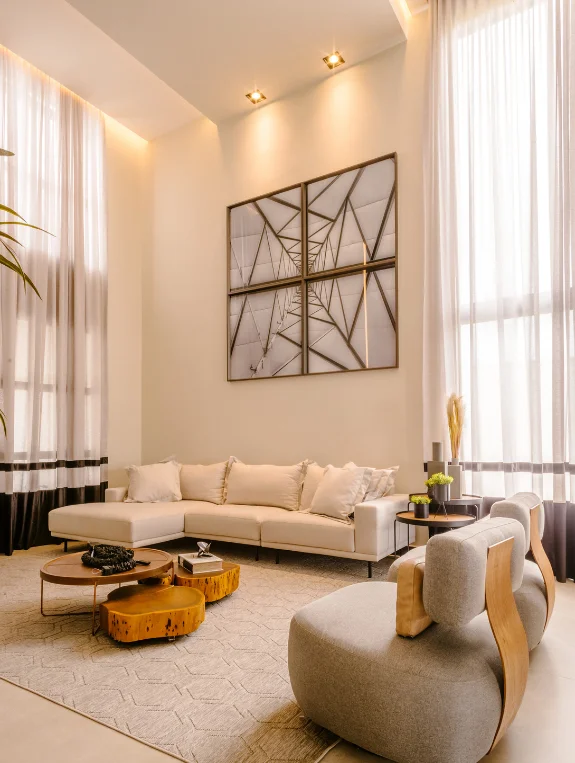
Why Expensive Spaces Never Have More Than Three Colors
Too many colors equals chaos. Three colors equals intentionality. Designers pick a palette, then stick to it religiously because this consistency signals design, not accident. Discipline is what separates wealthy aesthetic from budget aesthetic.
The Safe Expensive Looking Palette That Works in Every Small Living Room
Warm white or cream as the base, one neutral accent like warm wood or jute, one warm accent color like terracotta or dusty sage. That is the entire palette. Nothing else is allowed. This formula works in every small living room, every style.
The Formula — Pick Three Colors and Commit to Them in Every Single Design Choice
Every piece of furniture, every textile, every frame, every object—all in or around your three-color palette. This discipline is what separates designed from decorated. One color choice breaks the formula. Consistency is the formula.
The Complete Small Living Room Formula Put Together
Here’s how all five formulas work together to create professional design.
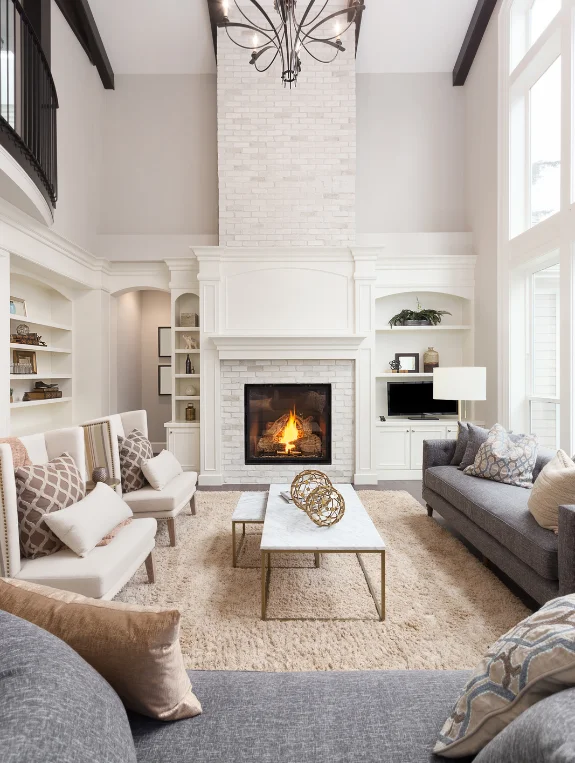
How These Five Formulas Stack on Top of Each Other to Create Expensive Looking
One statement piece in your color palette, scaled up generously, surrounded by breathing room, lit with warm layered light, everything supporting the statement piece. This is the formula every designer uses. This is the formula that works.
The Budget Implementation That Costs Less Than Most People Spend Randomly
One quality sofa $300–500, one large art print $20 printed at Costco in an IKEA frame $20, one jute rug $60, three warm lamps $30 each.
Total: under $600 for a professionally designed small living room. This is less than most people spend randomly on pieces that don’t work together.
The Mindset Shift That Makes This Formula Work
Stop thinking about what to add and start thinking about what to remove. Expensive-looking small spaces are full of absence, not presence. Emptiness is a luxury. Restraint is the statement. This mindset shift changes everything.
Where to Find Pieces That Fit These Formulas in the USA
Know where to invest and where to save smart.
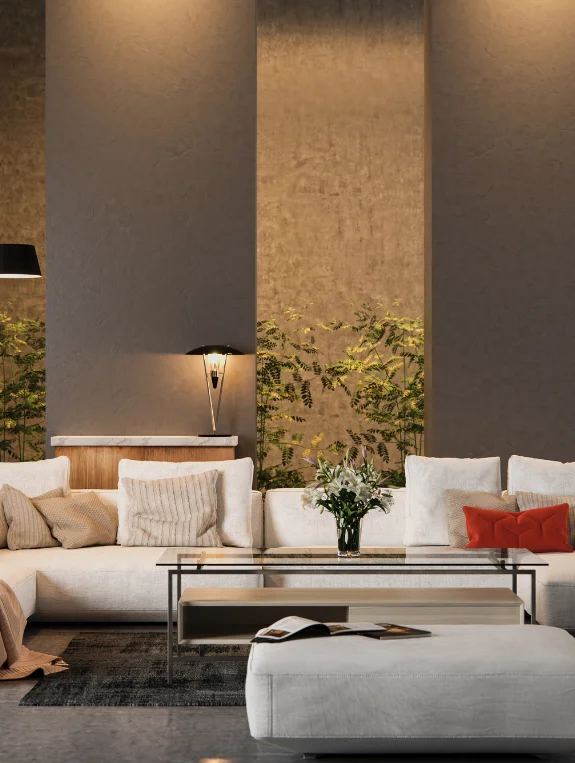
Best Sources for Statement Pieces That Anchor Small Spaces
Article for quality sofas that scale properly for small rooms. West Elm for beautifully designed modern pieces that feel expensive.
Restoration Hardware for the one investment piece that anchors everything. These sources understand formula-based design.
Best Budget Sources for Supporting Pieces That Fit the Formulas
IKEA for frames and basic furniture. Amazon for lighting and minimal accessories. Target for textiles that work in the color palette. Etsy for original art prints in your chosen colors. Smart shopping means formula-based pieces at every price point.
Dim corners can make small layouts feel even more confined, so brighten up tight square footage using apartment living room ideas for low-light spaces
Conclusion
Small living rooms look expensive when they follow formulas, not when they follow trends. One statement piece, breathing room, warm light, unity in color, and scale matched to the space—these formulas are timeless because they work. And they cost less than most people think.
Start this week with one formula. Pick your statement piece anchor and build everything around it. Formulas are powerful because they make decisions for you. By next month, your room will look like a designer did it. Because, in a way, you did—you just followed the same formulas they use.