Room Divider Hacks That Turn a Studio Into a Styled Multi-Room Apartment
Living in a tiny studio and wishing it felt like a real multi-room apartment?
You don’t need walls – just use smart room divider hacks like a tall open bookshelf, a chic curtain, or a slatted wood panel to split your space. Use a big rug and different lighting to make your bedroom, living room, and work area feel totally separate and styled.
These easy tricks will make your studio look bigger, more private, and super boujee on a budget. I’m sharing all my favorite hacks to turn one room into a luxury apartment vibe.
The Studio Apartment Secret That Designers Use But Nobody Talks About
The difference between a studio that feels like home and one that feels like a hotel room has nothing to do with square footage. It’s about the invisible lines that separate functions.
A well-divided studio feels like multiple rooms. A poorly divided studio feels like one chaotic multipurpose space that never settles into being anything.
Strategic room division is the designer secret that transforms studios.
Why Some Studio Apartments Feel Like Home and Others Feel Like Hotel Rooms
The difference is never about square footage. It’s about the invisible lines that separate functions. A well-divided studio feels like multiple rooms. A poorly divided studio feels like one chaotic multipurpose space that never settles into being anything.
The psychology of space matters more than the actual space itself.
Strategic Room Division Is the Most Underrated Studio Apartment Hack Available
Most studio renters either try to hide the open floor plan or ignore it completely. The best ones use clever dividers to create zones that let the brain understand where sleeping ends and living begins. This simple shift changes how the entire apartment feels and functions.
The Best Studio Divider Hacks That Actually Work
Here are the complete studio dividing solutions. These work because they’re both functional and beautiful.
Best Studio Divider Hacks That Actually Work:
- Bookshelf room divider — doubles as storage and zone separation instantly
- Ceiling-mounted curtain track with linen curtain — soft partition that closes when needed, opens to expand feeling of space
- Large leaning mirror beside the bed — creates a visual barrier and reflects light, making the zone feel bigger
- Floating shelves arranged as an open divider — storage styled as a design element that divides without blocking
- A tall room divider screen in natural wood — portable, removable, completely renter-friendly zone creation
- Plants arranged in a line — living dividers that soften the partition and add life to both zones
- Angled sofa placement with rugs — furniture placement that creates invisible zone boundaries without physical dividers
- An oversized plant or freestanding clothing rack — substantial enough to mark a boundary without blocking sightlines
- Different flooring treatment or layered rugs — visual zone definition without vertical barriers
- Lighting that anchors each zone separately — different light sources make the brain perceive separate rooms
The Studio Hack That Costs Nothing and Changes Everything
Angle your sofa away from the bed instead of against the wall. Immediately, the room feels like two separate spaces even without any physical divider. This single positioning choice is more powerful than most people realize.
Why Generic Room Dividers Fail in Studios — And What Works Instead
Not all dividers work. Here’s why some fail and what actually succeeds.
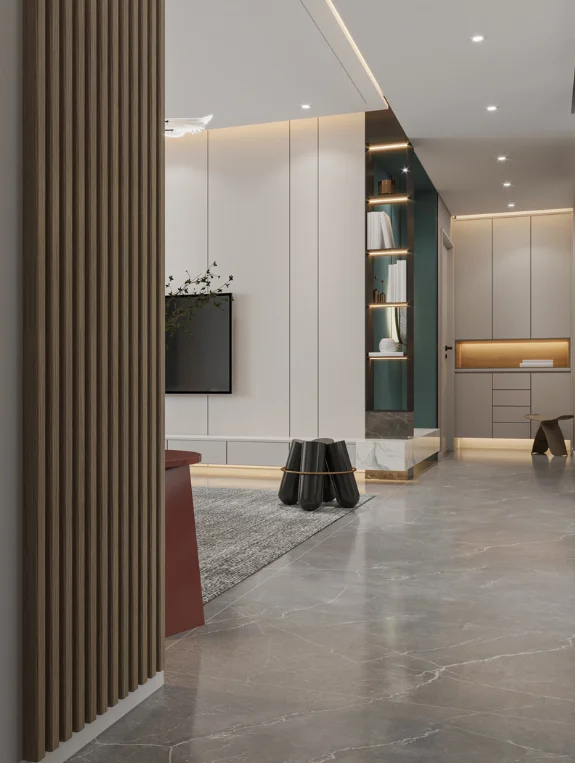
The Problem With Most Room Dividers — They Feel Like Band Aids on a Design Problem
A cheap freestanding screen looks like you’re hiding something. A hastily placed bookshelf looks like storage that somehow ended up in the middle of the room. Studio dividers that work feel like intentional design, not desperation.
Dividers must earn their presence through beauty and purpose.
The Best Studio Dividers Double as Functional Elements Not Just Visual Barriers
A dividing bookshelf holds books and plants. A dividing curtain can fully close or completely open. A dividing plant wall brings life to both sides. The divider that works earns its place through function and beauty simultaneously.
Transparency Matters More Than You Think in a Small Space
A solid wall of a divider makes the studio feel smaller, even though it separates functions. Open shelving, a transparent screen, a plant wall—these dividers separate zones while maintaining the sense of open space that studios need to feel livable.
The Bookshelf Divider — The Most Elegant Studio Hack Available
The bookshelf divider is the most beautiful, functional room divider available. Here’s how to use it.
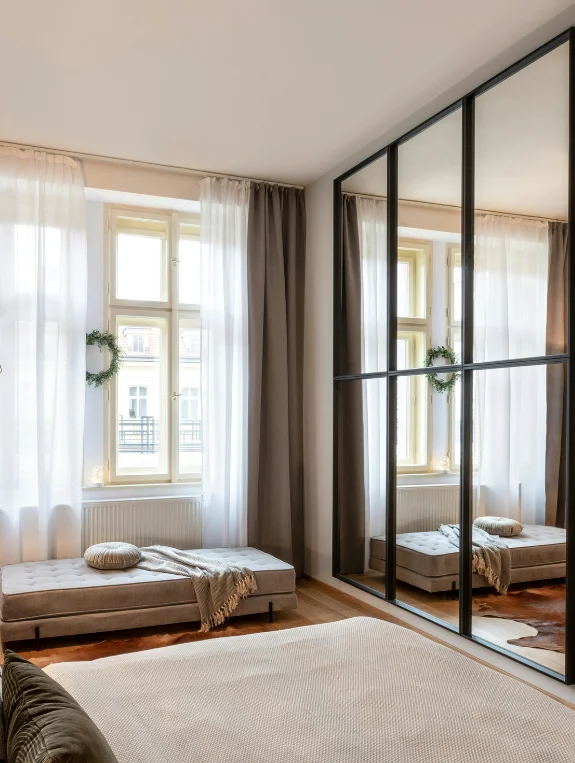
Why a Bookshelf Is Better Than a Wall and Costs Way Less Than Actual Construction
A simple bookshelf placed perpendicular to the wall creates a room divider that is actually storage. Styled intentionally on both sides, it looks like a design choice—not an attempt to block the bed from view. It’s architecture disguised as furniture.
The Styling Secret That Makes a Dividing Bookshelf Look Like Intentional Design
One side holds books. The other side holds plants and decorative objects. Style both sides with equal intention. The bookshelf becomes a focal point that anchors both zones instead of looking like a barrier.
The IKEA Setup That Costs Under $100 and Transforms a Studio
IKEA KALLAX or BILLY bookshelf, positioned perpendicular to the wall. Add warm wood contact paper to shelves if they’re white. Style with books, plants, and a few intentional objects. The studio immediately feels like two rooms.
The Ceiling-Mounted Curtain Trick That Makes Studios Feel Bigger Not Smaller
A curtain divider offers flexibility that walls can never provide. Here’s why it works so well in studios.
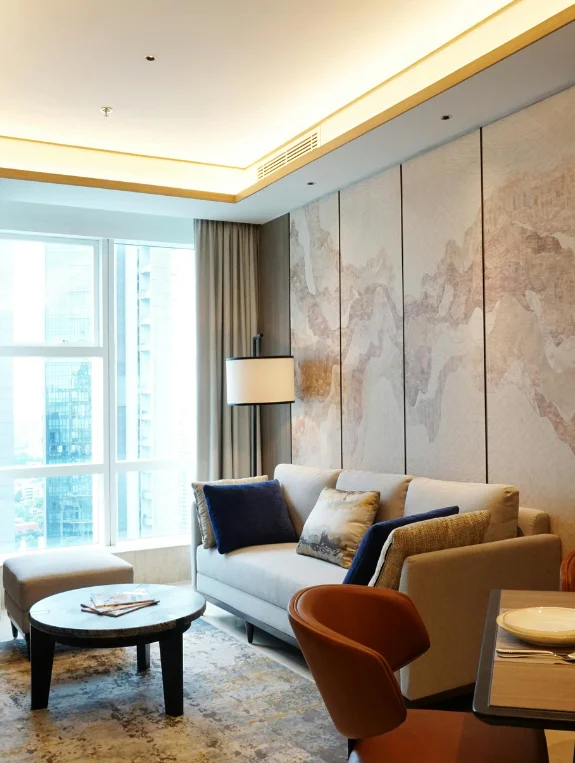
Why Curtains Work Better Than Walls in Studios — The Psychology Is Real
A curtain can fully separate zones when you need privacy. It can completely open to make the space feel larger and more connected when you don’t. The flexibility is something a wall can never offer—and it’s what makes studios actually livable.
The Setup That Takes 30 Minutes and Costs Under $50
A ceiling-mounted tension rod or track. Simple linen or sheer curtains hung floor to ceiling. This instant partition feels soft and flexible rather than permanent and claustrophobic. Installation is renter-friendly and takes less than an hour.
The Styling Secret — Keep the Curtain Open During the Day Close It Only at Night
An open curtain creates one fluid space—an open studio with intentional zones. A closed curtain creates private sleeping space when needed. The studio that does both feels bigger and more functional than one without this option.
The Plant Wall Divider — The Most Beautiful Zone Separation Method
Plants aren’t just decor. They’re living dividers that transform studios in ways hard materials can’t.

Why Living Things Create Better Dividers Than Dead Materials
A wall of plants creates a soft, natural boundary that feels organic to a studio. It brings life to the space, improves air quality, and creates a visual distinction between zones without making them feel separate. It’s a divider that enhances rather than restricts.
The Studio Plant Wall Formula That Does Not Require Green Thumb Expertise
Tall trailing pothos on high shelves, medium snake plants at eye level, small plants at table level. Varying heights of green create the visual divider effect while the variety makes it feel curated, not random. Low-light tolerant plants work perfectly in studios.
The Arrangement That Costs Less Than You Think
Home Depot plants under $5 each, IKEA shelves $20, Command strips for mounting $5. Under $100 total—and suddenly the studio has a stunning living divider that makes both sides feel more intentional. Beautiful design on a real budget.
The Rug and Furniture Placement Hack — No Divider Needed
Sometimes the most powerful dividers are invisible. Here’s how to create zones through positioning and rugs alone.

How Invisible Boundaries Change How Your Brain Experiences the Space
A rug defines the living zone. Sofa positioned with its back to the bedroom. Different colored walls if renting allows removable wallpaper.
The bedroom zone recedes, the living zone advances—and suddenly they feel like separate rooms. Your brain does the dividing work.
The Angle Positioning Trick That Architects Use in Real Small Spaces
Angle the sofa 45 degrees away from the wall instead of parallel to it. This single positioning choice makes the living zone feel like its own entity, separated from the bed zone.
No physical divider needed—just smart positioning. Architects use this trick constantly in small spaces.
The Layered Rug Trick for Studios Without Paint or Divider Options
One large rug for the living zone, one smaller rug for the bedroom zone. The rug edges become invisible walls that your brain registers as zone boundaries. This costs $60 and works in rental apartments without permanent changes.
Where to Find Studio Room Dividers and Zone Creation Solutions in the USA
Know where to shop and you’ll find smart dividing solutions at every budget.
Best Budget Sources for Smart Studio Dividing Solutions
IKEA for affordable bookshelves and curtain systems. Amazon for room divider screens, plants, and tension rods. Target for rugs and storage solutions that define zones. A complete studio zoning system costs under $150.
Mid Range Sources for Quality Dividers That Last
West Elm for beautiful room divider screens and quality rugs. Article for elegant furniture that positions well for zone creation.
Wayfair for a wide selection of divider screens in every aesthetic. Worth the investment for pieces that anchor your design.
Conclusion
A studio with smart zones feels twice as large and ten times more livable. The divider that works isn’t about blocking—it’s about creating invisible boundaries that your brain understands as separate spaces.
A bookshelf, a curtain, a plant wall, a rug—any of these choices create the zoning that makes studios genuinely work as homes.
Start with the simplest hack: angle your furniture away from the bed. That positioning change alone costs nothing and changes how the studio feels immediately.
Then add a bookshelf or curtain, and watch the transformation continue. Your studio will stop feeling like a hotel room and start feeling like home.