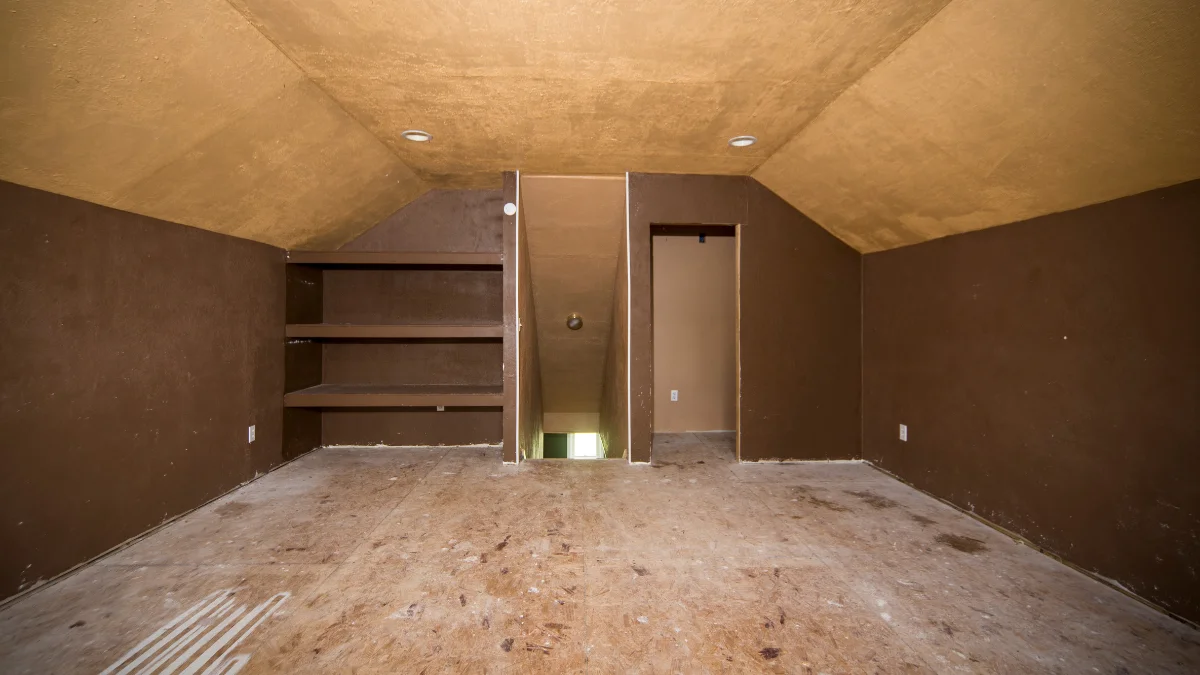
Awkward Attic Wall Closet Layout Mistakes That Crush Clothes Against Ceiling Slants
Crushing clothes against ceiling slants happens when you push tall wardrobes into the lowest angle and hang long items under the slope.
Using deep fixed shelves, single high rods, and bulky doors that hit the slant also wastes space and wrinkles clothes. Place short drawers and folded storage under the low slant, not hanging.
Hanging needs full height so it belongs on the tallest wall, not under the angled ceiling. Low drawers, pull-out bins, and double short rods keep clothes visible and wrinkle-free in narrow attics. Fixing the layout makes your closet feel bigger, cleaner, and way more functional.
Attic Closets Are the Most Frequently Wasted Storage Opportunity in Any Home
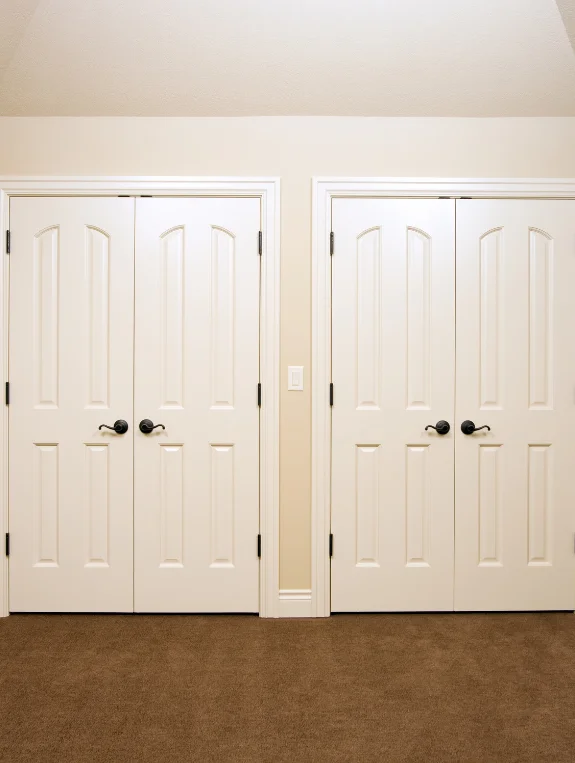
An Attic Closet Built Without Accounting for the Ceiling Slant Ends Up Unusable Within Weeks
A hanging rail positioned so the ceiling meets it at shoulder height, a rail that can’t be reached because the slant comes down across the access path, a drawer that pulls out into the slope and can’t open fully, these are exactly the mistakes that turn an attic closet frustrating within weeks of installation.
Every Attic Closet Layout Problem Has a Specific Fix That Requires No Major Reconstruction
Moving a rail, removing a section, or swapping in a different storage type where hanging simply doesn’t fit are targeted fixes that turn a frustrating closet into some of the most effective storage in the whole house.
The Attic Closet Mistakes at a Glance
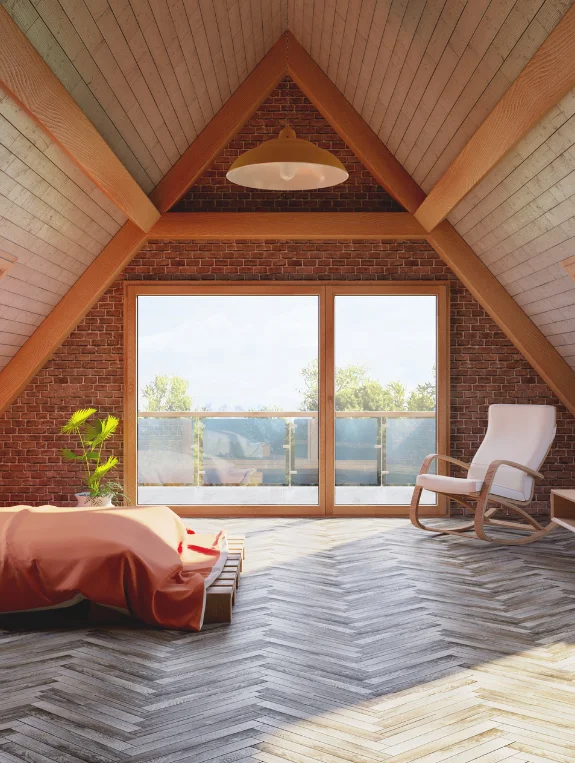
The Layout Mistakes That Ruin Attic Closets
- A hanging rail positioned where the ceiling slant drops before the rail actually ends
- A rail placed too close to the back wall in a shallow cavity
- Full-length hanging in a space that only has headroom for short hanging
- Drawers opening toward the slope rather than away from it
- No lighting inside the closet
- No clear floor or base, leaving items lost beneath hanging clothes
- One single rail running the full length regardless of the ceiling profile
- No fixed shelf above the rail, leaving that whole zone empty
The Mistake That Ruins the Most Attic Closets
Out of everything on this list, a hanging rail that runs all the way to where the ceiling slant begins causes the most trouble. The last third of the rail becomes effectively inaccessible as the slope descends over it, and clothes crushed against the slope can’t be reached or kept wrinkle-free. That rail should have been shortened, or swapped for a different storage type, right at the slant point.
The Ceiling Slant Assessment That Must Come Before Any Closet Design
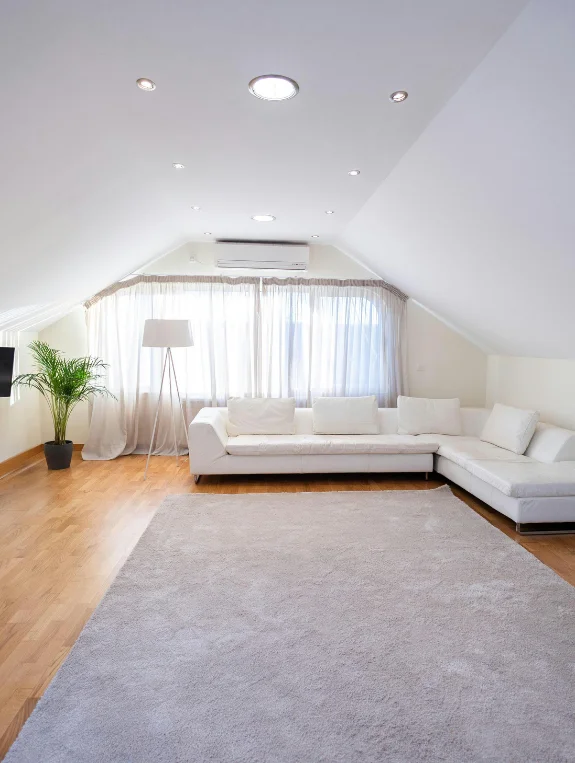
Mapping the Usable Height at Every Point in the Closet
Measuring the ceiling height at 30cm intervals across the full width of the closet reveals exactly where full-length hanging is possible and where short hanging or drawers need to take over instead. It’s a five-minute measurement that determines essentially every closet decision that follows.
The Minimum Heights That Different Storage Types Require
Full-length hanging needs a 160cm minimum ceiling, short hanging needs 110cm minimum, drawers need 90cm minimum, and shelving needs just 45cm minimum. This height guide matches each storage type to the actual clearance available at every section.
The Zone Map That Turns the Height Profile Into a Storage Plan
Drawing the closet from the side, marking the ceiling slant, and labeling each zone with the storage type it can actually support creates a visual map that makes the whole design obvious before a single item gets moved or purchased.
The Hanging Rail Fixes That Work Under Ceiling Slants
Shortening the Rail to Stop Before the Slant Begins
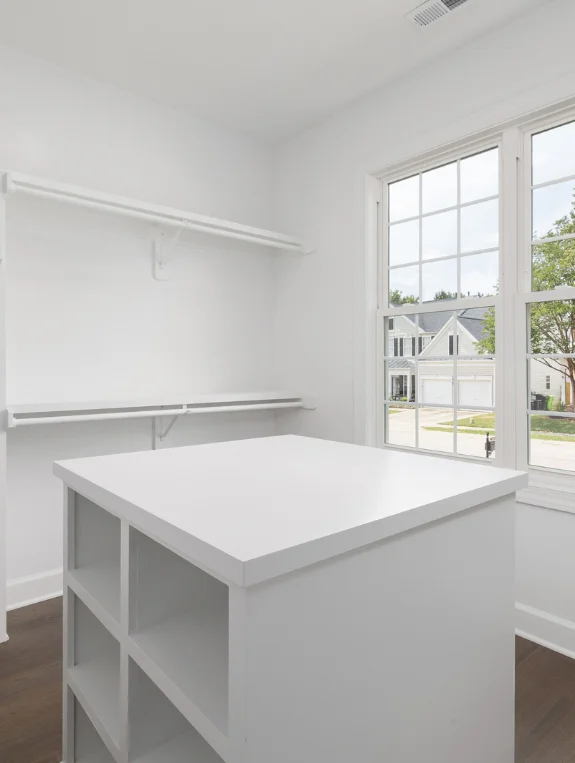
Cutting the hanging rail so it ends about 15cm before the ceiling drops below useful hanging height lets clothes hang freely with zero slant interference, the simplest fix that solves the crushing problem immediately.
An Angled Rail That Follows the Ceiling Profile Downward
A slanted hanging rail that descends along with the ceiling slope lets clothes hang at varying heights that follow the roofline, using the full closet depth while keeping every garment accessible instead of crushed at the lowest point.
Double-Stacked Short Rails Where Full-Length Cannot Work
Where ceiling height drops below 160cm, two short rails stacked vertically, one at 110cm and one at 55cm, holding shirts and folded trousers on both, doubles the hanging capacity in that reduced-height section.
The Drawer and Shelf Mistakes That Waste Low Sections
Drawers Positioned to Open Into the Slope
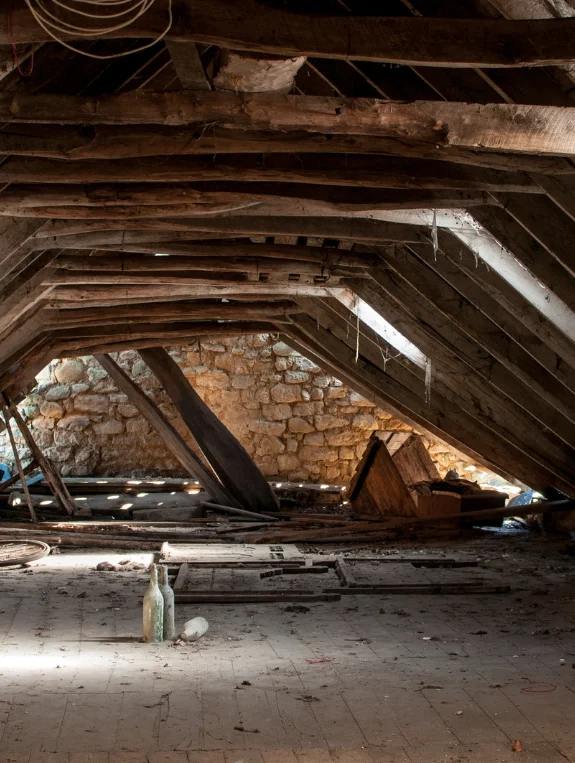
A drawer unit placed so its front opens toward the slanted wall means the drawer can never pull out fully before hitting the slope, storage that’s technically present but practically unusable. The whole unit needs to rotate so drawers open away from the slope instead.
The Correct Drawer Orientation for Slanted Attic Closets
Every drawer should open either outward from the closet or parallel to the slope, never toward it. This orientation decision needs to happen during installation planning, not get discovered after the furniture is already built in.
Replacing Drawers With Pull-Out Baskets in Very Low Sections
Where the ceiling is too low even for standard drawers, pull-out wire baskets on full-extension slides offer a lower profile and open successfully in less height, a storage type that fits exactly where drawers can’t.
The Lighting Mistake That Makes Attic Closets Difficult to Use
No Internal Lighting in an Attic Closet
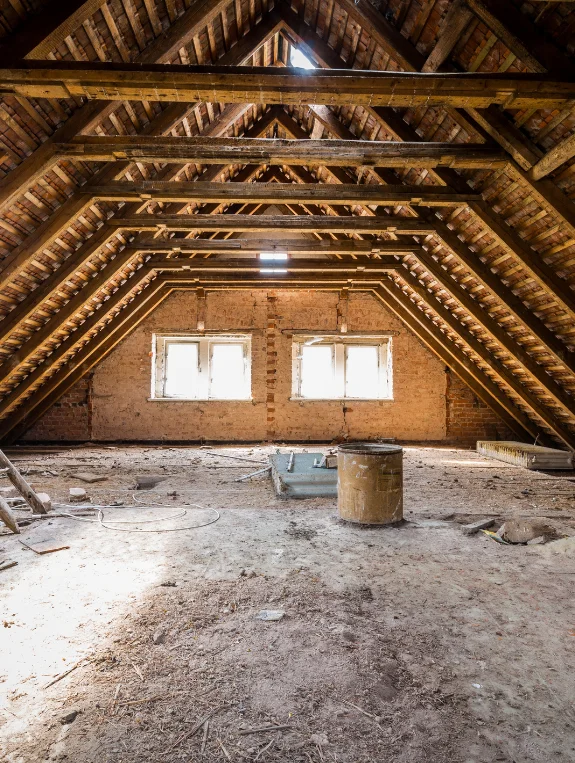
An attic closet with no internal lighting is genuinely only partially usable, since clothes in the dark rear section can’t be identified by color without pulling them out into the light first. It’s a usability problem that costs about $15 to fix and shows up in most attic closets.
The Easiest Attic Closet Lighting Solution
A battery-powered motion sensor LED strip or LED puck light installed inside the closet door activates automatically when the door opens, requiring no wiring and no electrician, a closet that illuminates itself for under $20.
Warm vs Cool Light Inside the Closet
Warm 2700K light makes clothes look their true color and the closet feel genuinely welcoming, while cool white light washes colors out. Bulb temperature actually matters more inside a closet than almost anywhere else in the house.
The Base and Floor Mistakes in Attic Closets
No Fixed Base Allowing Items to Fall Into an Inaccessible Dark Zone
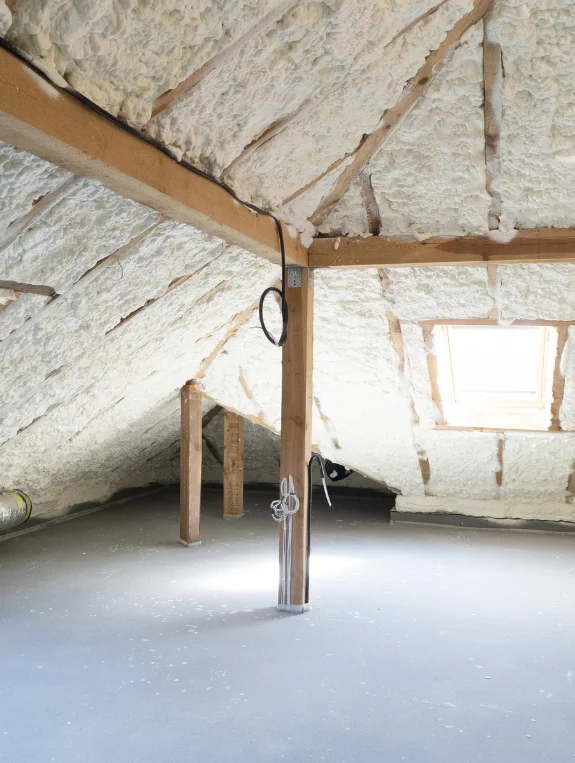
Without a clean base inside the closet, items that fall from the hanging zone drop into a dark, unreachable space below and are essentially gone. A simple timber base board, or extending the existing floor into the closet, eliminates that inaccessible zone entirely.
Adding a Simple Shelf at Base Level to Catch and Organize Dropped Items
A low shelf at 20 to 30cm height, running the full width of the closet, gives shoes somewhere to sit below the hanging clothes and keeps anything from falling behind it, organizing what used to be wasted floor space.
The Non-Slip Surface That Makes the Closet Floor Practical
A simple non-slip mat or rubber shelf liner on the closet base keeps shoes from sliding around and small items from rolling into corners, a $5 addition that makes the whole base genuinely organized.
Where to Find Attic Closet Fixes
Best Sources for Rails Drawer Units and Pull-Out Baskets
IKEA’s PAX system covers modular closet components, Amazon carries pull-out wire baskets and battery closet lights, and Bunnings in Australia offers closet track and rail systems.
Best Sources in the UK
IKEA UK covers PAX, Screwfix carries rails and brackets, and Amazon UK offers battery lights and pull-out baskets.
Conclusion
Every attic closet problem really comes back to one root cause: not accounting for the ceiling slant before designing the space. Height mapping first, zone assignment second, rails shortened to clear the slant, drawers opening away from the slope, a battery light inside, and a base shelf at floor level together solve essentially every common attic closet problem.
Five minutes with a tape measure, done before changing anything else, reveals exactly what’s possible at each point in the closet and makes every fix decision after it obvious and correct.